 Excellent PLC


Incident Overview
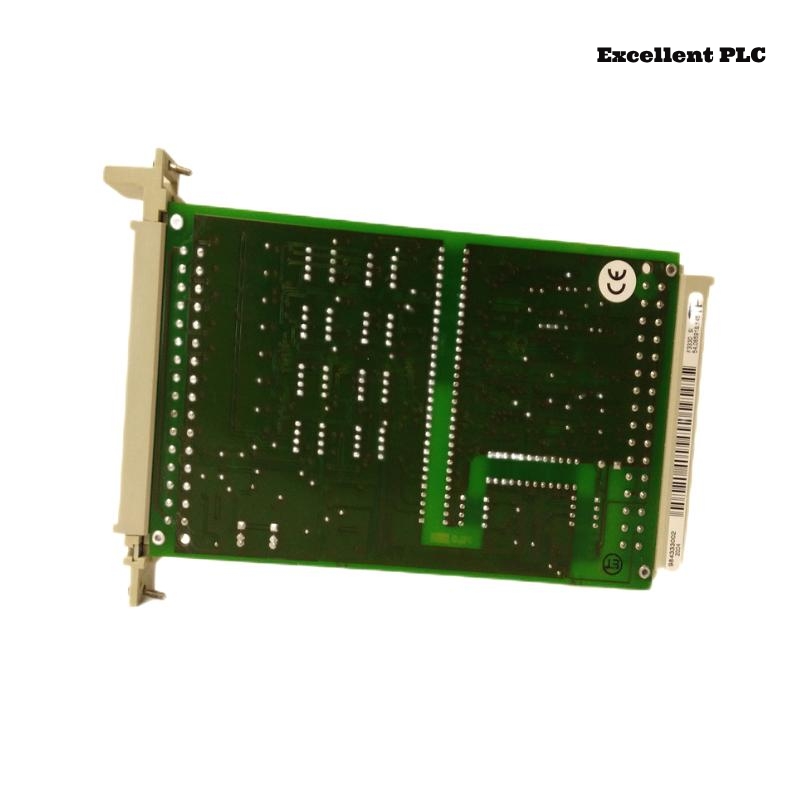
In a newly commissioned control cabinet, the Black Horse F1202 Safety Relay Module consistently entered a fault state immediately after power was applied.
Observed behavior:
-
Fault LED illuminated instantly at startup
-
No safety output activation possible
-
Reset button had no effect
-
Safety inputs confirmed wired correctly
The module never reached normal standby state.
Understanding F1202 Startup Self-Test
Upon power-up, the F1202 performs internal diagnostic checks including:
-
Power supply voltage validation
-
Internal relay state verification
-
Input channel short detection
-
Output feedback circuit integrity
-
Memory consistency check
If any parameter falls outside predefined tolerance, the module locks into fault state to prevent unsafe activation.
Step 1 – Verify Power Supply Quality
Safety modules are more sensitive to voltage stability than standard relay modules.
1. Measure DC supply during power-up.
2. Monitor for voltage dip below threshold.
3. Check for ripple exceeding specification.
4. Observe rise time during startup.
In this case, a voltage dip was detected during cabinet energization due to simultaneous startup of multiple loads.
Step 2 – Analyze Power-On Rise Time
Safety modules require stable voltage ramp-up within defined timing limits.
– Monitor supply voltage ramp curve.
– Confirm voltage reaches nominal without oscillation.
– Ensure no overshoot or delayed stabilization.
The supply exhibited oscillation during the first 300 milliseconds.
Root Cause – Inadequate DC Supply Capacity
The DC power supply was undersized for total cabinet load.
During startup:
-
Inrush current caused temporary voltage sag
-
F1202 internal diagnostic detected undervoltage
-
Module locked into protective fault mode
This is expected behavior for safety-rated devices.
Controlled Verification Procedure
1. Temporarily power F1202 from dedicated supply.
2. Observe startup behavior.
3. Confirm normal initialization.
With a dedicated regulated supply, the module started normally and entered standby state.
Corrective Action Plan
– Upgrade DC power supply capacity.
– Separate safety module power from heavy inductive loads.
– Install soft-start or staggered startup sequencing.
– Verify voltage stability under full cabinet energization.
After installing a higher-capacity regulated supply, startup faults were eliminated.
Additional Possible Causes
If power supply integrity is confirmed, consider:
-
Cross-short detection active at startup
-
EDM loop miswired
-
Internal relay welded from prior failure
-
Internal EEPROM fault
However, startup fault conditions are most commonly power-quality related.
Safety Engineering Recommendations
-
Always calculate total cabinet load before selecting power supply.
-
Avoid sharing safety power rails with high inrush devices.
-
Perform startup voltage waveform analysis during commissioning.
-
Validate safety module initialization during FAT and SAT testing.
Stable startup conditions are essential for functional safety compliance.
Conclusion
When the Black Horse F1202 Safety Relay Module enters fault state immediately at power-up, the most common cause is power supply instability or undervoltage during startup. Structured voltage monitoring and load isolation testing provide accurate diagnosis and ensure reliable initialization within Planar F safety systems.