 Excellent PLC


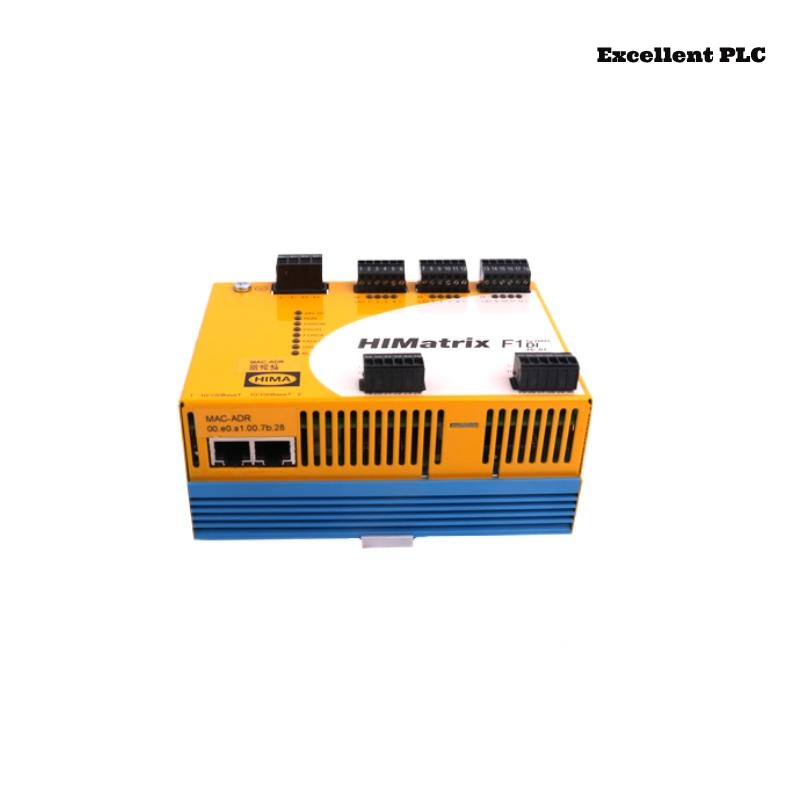
Fault Overview
In a HIMatrix-controlled automation system, one channel on the Black Horse F2 DO 16 02 Remote I/O Module remained permanently energized.
Observed symptoms:
-
Output command from controller = OFF
-
Physical output voltage present (24V)
-
Load device continuously powered
-
No communication fault
-
Other channels normal
Unlike logic errors, this behavior indicated hardware-level conduction failure.
Output Hardware Architecture
The F2 DO 16 02 typically uses:
-
Low-side or high-side MOSFET switching
-
Integrated overcurrent monitoring
-
Thermal shutdown
-
Diagnostic feedback
When MOSFET fails shorted, it becomes permanently conductive.
Step 1 – Confirm Software State
1. Monitor controller output variable.
2. Disable forcing.
3. Download and verify program consistency.
Controller confirmed output OFF.
Step 2 – Voltage Verification
1. Measure voltage between output and return.
2. Disconnect field load.
3. Re-measure output terminal voltage.
Voltage remained at supply level even without load connected.
Step 3 – Resistance Comparison
1. Power down module.
2. Measure resistance between output and supply.
3. Compare to healthy channel.
Faulty channel showed near-zero resistance.
Healthy channels showed high resistance.
Root Cause – Inductive Load Without Flyback Protection
The connected device was:
-
A DC solenoid valve
-
No flyback diode installed
-
Long cable routing
-
Frequent switching cycles
When de-energized, inductive collapse generated high-voltage spike.
Over time, repeated spikes exceeded MOSFET voltage rating, causing internal short circuit.
Why Protection Did Not Prevent Damage
Electronic overcurrent protection protects against excessive current, not voltage spikes.
Inductive overvoltage can:
-
Punch through MOSFET junction
-
Create permanent conductive path
-
Destroy internal gate insulation
This type of failure is cumulative.
Corrective Action Plan
– Replace F2 DO 16 02 module.
– Install flyback diode across solenoid.
– Verify diode polarity.
– Consider RC snubber for long cable runs.
After adding proper suppression, replacement module operated normally.
Preventive Engineering Guidelines
-
Always protect inductive loads with suppression devices.
-
Avoid long unshielded output cables.
-
Review MOSFET voltage rating vs load characteristics.
-
Perform switching transient analysis during commissioning.
MOSFET-based outputs are efficient but sensitive to unmanaged inductive energy.
Conclusion
A permanently energized output on the Black Horse F2 DO 16 02 Remote I/O Module is most commonly caused by MOSFET short circuit failure due to repeated inductive voltage spikes. Proper suppression design and structured diagnostic testing ensure reliable operation in HIMatrix safety systems.