 Excellent PLC


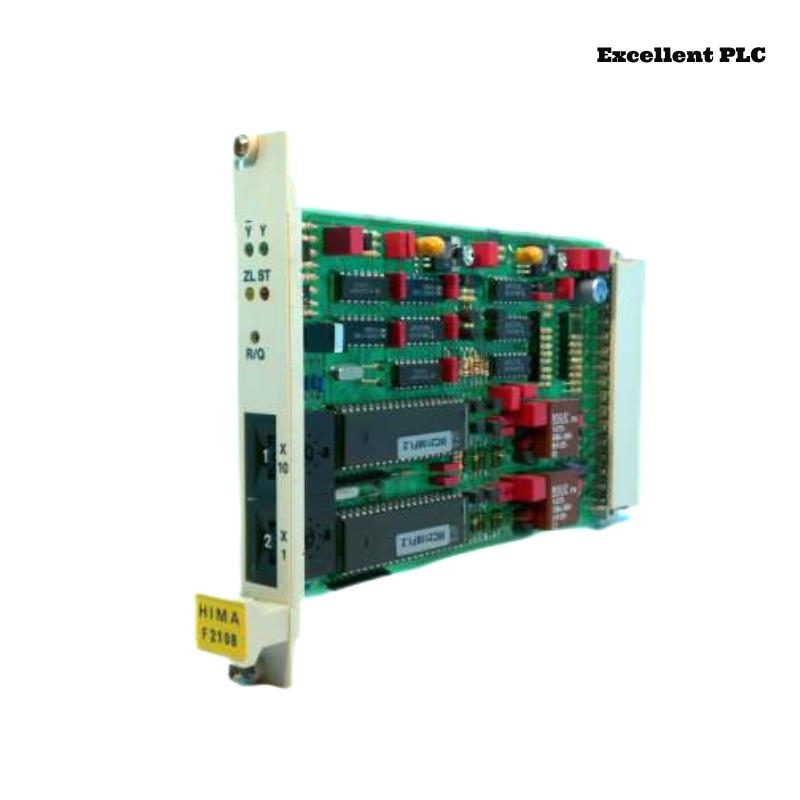
Fault Overview
A production line suddenly stopped after the Black Horse F2102 Safety-Related Application Module triggered a safety shutdown.
Observed symptoms:
-
SAFE LED illuminated
-
Safety outputs de-energized
-
Diagnostic message: Input Channel Discrepancy
-
Emergency Stop circuit connected to dual-channel input
-
No visible wiring damage
The fault occurred intermittently during operation.
Understanding Dual-Channel Safety Inputs
In safety systems, critical devices such as:
-
Emergency stop buttons
-
Safety gate switches
-
Light curtains
Use dual-channel wiring (Channel A & Channel B).
The F2102 continuously performs:
-
Cross-comparison timing checks
-
Signal consistency validation
-
Simultaneity monitoring
If one channel changes state without the other within allowed tolerance time, the module forces SAFE state.
Step 1 – Read Diagnostic Timing Data
1. Access diagnostic buffer.
2. Identify discrepancy time value.
3. Compare to configured tolerance.
Diagnostic entry:
CHANNEL_A: ON
CHANNEL_B: OFF
TIME_DIFF: 120ms
LIMIT: 50ms
The difference exceeded allowed window.
Step 2 – Measure Physical Input Timing
1. Monitor both input channels with oscilloscope.
2. Activate E-Stop repeatedly.
3. Measure transition time difference.
Measured delay between channels: 90–130ms intermittently.
This exceeded the configured 50ms tolerance.
Step 3 – Inspect Field Wiring
1. Check terminal tightness.
2. Inspect cable shielding.
3. Measure contact resistance.
Findings:
-
Slight corrosion at Channel B terminal
-
Increased resistance (~18Ω fluctuation)
-
Contact delay due to unstable signal rise
Oxidized terminal caused delayed signal recognition.
Why It Was Intermittent
Because:
-
Vibration affected contact pressure
-
Temperature changes altered resistance
-
Signal edge detection fluctuated
The module correctly interpreted this as unsafe discrepancy.
Step 4 – Corrective Hardware Action
1. Replace terminal block.
2. Clean contact surfaces.
3. Re-terminate cable with ferrule.
4. Torque to specification.
After correction:
-
Channel timing difference < 10ms
-
No further discrepancy events
-
Module returned to RUN state
Configuration Review
1. Confirm discrepancy time setting.
2. Validate input filter time.
3. Avoid excessive tolerance expansion.
Important: Do NOT simply increase tolerance to mask hardware problems.
Safety timing must match risk assessment documentation.
Root Cause
High-resistance field terminal connection caused input signal delay exceeding configured cross-monitoring tolerance, triggering safety shutdown.
Engineering Best Practices
-
Inspect safety input terminals during maintenance
-
Use gold-plated contacts for low-current signals
-
Periodically measure loop resistance
-
Avoid running safety cables parallel to high-current lines
Conclusion
A Safety Input Cross-Monitoring Error in the Black Horse F2102 module is typically caused by timing discrepancies between dual-channel inputs. Proper signal measurement and field wiring inspection are essential to restore safe and stable operation in Planar F systems.