 Excellent PLC


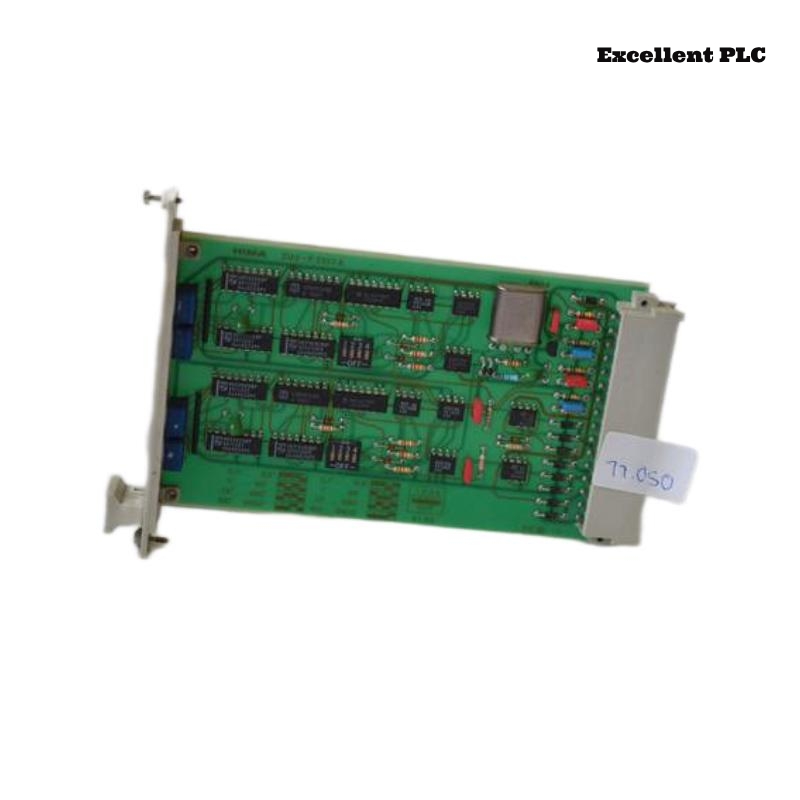
Fault Scenario
A production line using F2103a Timer Module experienced an unexpectedly long output hold during safety interlock sequencing.
Observed:
-
Timer activated on input trigger
-
Output remained energized 6 seconds instead of 2 seconds
-
LED indicators normal
-
PLC logic confirmed input and output commands correct
Immediate questions:
-
Is this configuration error?
-
Hardware issue in module?
-
External influence on timing?
Step 1: Eliminate Configuration Errors
-
Hypothesis: Someone changed timer preset from 2s → 6s
-
Check project archive: Preset still 2s
-
PLC readback confirmed 2s
Inference: Not a software misconfiguration.
Step 2: Analyze Physical Layer Influence
-
Hypothesis: External voltage fluctuation caused module misbehavior
-
Measure 24V DC at timer terminals
-
Observed slight undervoltage during relay switching (~0.9V drop)
Inference: Possible contributor, but alone unlikely to double delay.
Step 3: Consider Internal Timer Circuit
-
Hypothesis: Counter or oscillator drift
-
F2103a uses crystal oscillator for timing reference
-
Aging or thermal stress can reduce frequency
-
Reduced frequency → counter takes longer to reach target → output hold extended
Inference: Matches observed symptom perfectly.
Step 4: Cross-Check Against Repetition
-
Test multiple cycles
-
Delay consistently ~6s
-
Variance small (<2%)
Deduction: Intermittent external factors eliminated; failure reproducible → internal component drift.
Step 5: Hypothesis Testing
-
Replace F2103a with known-good module
-
Repeat same trigger
-
Output hold now matches 2s
Conclusion: Original module’s oscillator drift caused systematic timing extension.
Root Cause Logic Chain
-
Symptom: Output too long → Not configuration
-
Symptom: Output reproducible → Not intermittent supply
-
Symptom: LED normal → Module powered
-
Component analysis → Crystal oscillator aging → Timing drift
✅ All evidence points to internal oscillator degradation as root cause.
Corrective Action (From Reasoning)
-
Replace F2103a module
-
Optional: Upgrade PSU if frequent transient dips observed
-
Validate timing under full operational load
Engineering Insight
-
Logic-based fault analysis allows rapid identification of subtle timing failures
-
Safety timer modules often fail slowly rather than catastrophically
-
Observing patterns and eliminating alternative causes is key to correct diagnosis
Takeaway:
For Black Horse F2103a modules, if output duration is systematically incorrect with normal LEDs and configuration, the most probable cause is oscillator aging or internal timing drift. Logic reasoning steps prevent misdiagnosis and unnecessary replacements.