 Excellent PLC


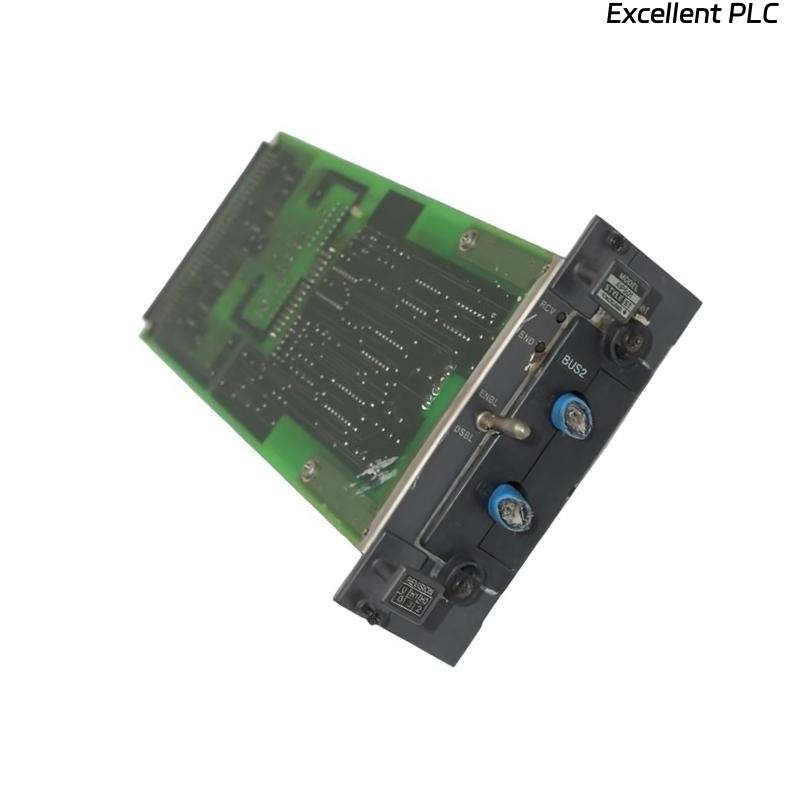
The Yokogawa AIP501 V Net Coupler Unit is a key communication interface used in CENTUM CS 3000 and CENTUM VP Distributed Control Systems (DCS). It connects Field Control Units (FCU) to the V net real-time control network, enabling deterministic communication between controllers, operator stations, engineering stations, and other system nodes. Because it is central to network connectivity, faults in the AIP501 can result in controller isolation, loss of operator visibility, or breakdown of redundant communication paths. A structured troubleshooting approach is required to quickly identify the cause, restore V net communication, and maintain system availability.
Contents
- 1. Understanding V Net Communication Faults
- 2. Common Failure Symptoms
- 3. Typical Causes of Faults
- 4. Initial Hardware Inspection
- 5. Communication Switch Check
- 6. V Net Cable Diagnostics
- 7. Network Status Analysis
- 8. Diagnostic Log Review
- 9. Recommended Troubleshooting Workflow
- 10. Corrective Actions
- 11. Communication Recovery Verification
- 12. Preventive Maintenance
- 13. Real Industrial Maintenance Case
- 14. Frequently Asked Questions
Understanding V Net Communication Faults
The AIP501 ensures real-time communication between FCUs and the V net backbone. Failures typically manifest as loss of controller visibility, degraded redundancy, or intermittent communication instability. These faults are often caused by configuration errors, switch misplacement, cable issues, or network topology disturbances rather than internal hardware failure.
Common Failure Symptoms
- Controller not visible on V net.
- Intermittent communication loss between FCU and operator stations.
- Redundant network path not active.
- V net communication alarms in system diagnostics.
- Engineering station cannot access controller data.
- Network status LEDs indicate fault or inactive state.
- Delayed or missing process data updates.
Typical Causes of Faults
- Communication switch left in DSBL mode.
- Loose or damaged V net cables.
- Incorrect network addressing or configuration.
- Faulty branch connectors or couplers.
- Power instability in FCU or utility unit.
- Redundant network path not configured correctly.
- Electromagnetic interference affecting signal integrity.
- Internal AIP501 hardware malfunction (rare).
Initial Hardware Inspection
- Verify AIP501 is fully seated in slot.
- Inspect V net connectors for damage or contamination.
- Check cable routing and bending radius.
- Verify FCU power supply stability.
- Inspect status LEDs on the module.
Communication Switch Check
- Verify switch is set to ENBL for normal operation.
- Ensure DSBL is not left active after maintenance.
- Toggle switch only during safe maintenance procedures.
- Confirm system recognition after switch change.
V Net Cable Diagnostics
- Check continuity of V net cable lines.
- Inspect connectors for loose engagement.
- Verify branch connection integrity.
- Replace damaged or aged cables.
- Ensure proper separation from power wiring.
Network Status Analysis
- Verify FCU appears in V net topology.
- Check redundancy status indicators.
- Confirm communication domain consistency.
- Review controller synchronization state.
- Analyze network traffic logs if available.
Diagnostic Log Review
| Observed Condition | Possible Diagnosis |
|---|---|
| Controller not detected | Switch in DSBL or cable disconnection |
| Intermittent communication | Loose connector or cable degradation |
| Redundant path inactive | Configuration mismatch or hardware fault |
| V net alarm active | Network interruption or synchronization failure |
| Delayed data updates | Network congestion or signal degradation |
Recommended Troubleshooting Workflow
VERIFY AIP501 SEATING
CHECK COMMUNICATION SWITCH (ENBL/DSBL)
INSPECT V NET CABLES
VERIFY POWER SUPPLY
CHECK NETWORK CONFIGURATION
REVIEW SYSTEM LOGS
TEST COMMUNICATION PATHS
IDENTIFY ROOT CAUSE
RESTORE CONNECTIVITY
MONITOR STABILITY
A structured workflow helps isolate whether the issue is physical, configuration-related, or network-related before replacing hardware.
Corrective Actions
- Set communication switch to ENBL if disabled.
- Reconnect or replace V net cables.
- Clean or replace connectors.
- Correct network configuration mismatches.
- Restore stable FCU power supply.
- Reinitialize controller communication after repair.
- Replace AIP501 only after confirming hardware failure.
Communication Recovery Verification
- Verify FCU appears on V net topology map.
- Confirm operator station visibility.
- Test real-time data updates.
- Check redundancy path activation.
- Review absence of communication alarms.
Preventive Maintenance
- Inspect V net connectors regularly.
- Verify switch position during maintenance closure.
- Clean connector contacts periodically.
- Test redundant communication paths.
- Review network diagnostics trends.
Real Industrial Maintenance Case
In a petrochemical facility, operators reported that one FCU disappeared from the V net after scheduled maintenance.
Investigation showed that the AIP501 communication switch had been left in the DSBL position after replacement, preventing network participation.
After switching to ENBL:
- The FCU reappeared immediately on the V net.
- Operator stations regained full visibility.
- Redundant communication paths became active.
- No further network alarms occurred.
Frequently Asked Questions
Why is the FCU not visible on V net?
Most commonly due to DSBL switch position, loose V net cable connections, or configuration mismatches.
Can cable issues cause intermittent communication?
Yes. Loose connectors, damaged cables, or poor shielding can cause unstable V net communication.
When should the AIP501 be replaced?
Only after confirming correct switch position, stable power, intact cables, correct configuration, and persistent communication failure indicating internal hardware fault.
Summary
Effective troubleshooting of the Yokogawa AIP501 V Net Coupler Unit requires systematic verification of switch position, cable integrity, power stability, network configuration, and diagnostic logs. Following a structured process ensures reliable real-time communication, restores system visibility, maintains redundancy, and minimizes downtime in Yokogawa DCS environments.