 Excellent PLC


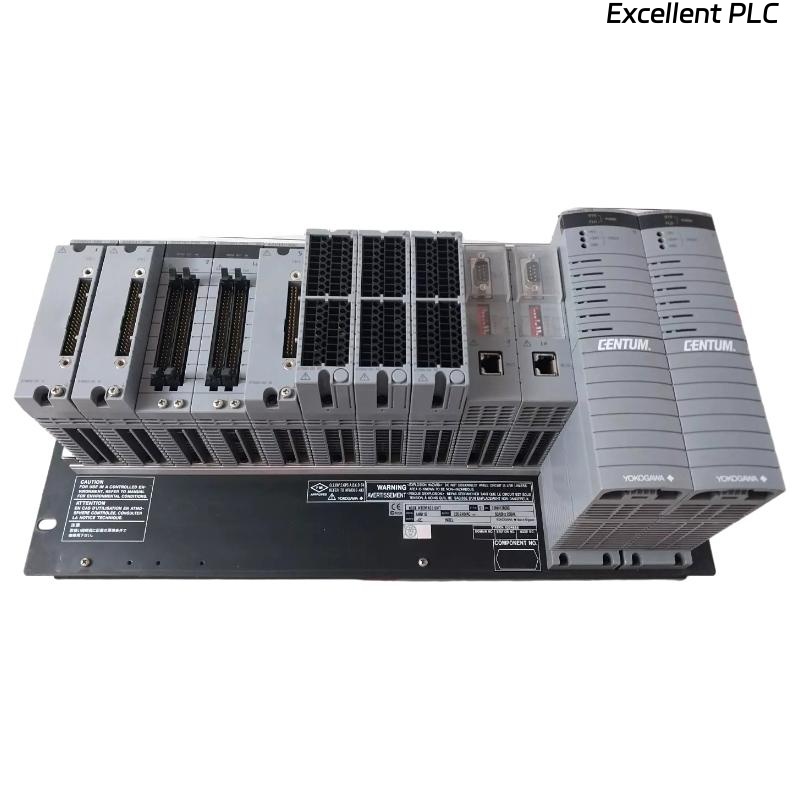
The Yokogawa ANR11D-410 Optical ER Bus Node Unit is a dual-redundant remote Field I/O (FIO) node used in Yokogawa CENTUM VP and CENTUM CS 3000 Distributed Control Systems (DCS). It communicates with the Field Control Unit (FCU) through a dual-redundant optical ER Bus using fiber optic communication, allowing remote installation of I/O cabinets while providing excellent immunity to electromagnetic interference, electrical isolation, and high communication reliability. The ANR11D-410 accommodates redundant power supplies, optical ER Bus interface modules, and FIO analog and digital I/O modules for mission-critical industrial automation applications. Optical ESB/ER bus architectures support long-distance communication using dedicated optical repeater modules and fiber optic cabling.
Contents
- 1. Product Overview
- 2. Main Features
- 3. Typical Applications
- 4. Installation Preparation
- 5. Node Unit Installation
- 6. Fiber Optic ER Bus Wiring
- 7. System Configuration
- 8. Commissioning Procedure
- 9. Functional Verification
- 10. Preventive Maintenance
- 11. Practical Installation Case
- 12. Frequently Asked Questions
Product Overview
The ANR11D-410 is designed for remote distributed Field I/O installations connected through a redundant optical communication network. It allows installation of power supply modules, communication interface modules, and FIO I/O modules while maintaining reliable long-distance communication with the FCU. Fiber optic transmission provides excellent noise immunity and supports remote cabinet installation in electrically noisy industrial environments. Optical ESB communication supports transmission distances of up to 50 km when appropriate repeater modules are used.
Main Features
- Dual-redundant optical ER Bus communication
- Fiber optic long-distance transmission
- Supports redundant power supplies
- Excellent electromagnetic interference immunity
- Electrical isolation between control room and remote cabinets
- Supports Yokogawa FIO analog and digital I/O modules
- Industrial high-availability design
- Continuous 24-hour operation
Typical Applications
- Oil and gas production facilities
- Large refinery complexes
- LNG terminals
- Power generation plants
- Chemical processing facilities
- Pipeline monitoring stations
- Remote instrument buildings
- Large distributed automation systems
Installation Preparation
- Verify the ANR11D-410 model and suffix code.
- Prepare redundant fiber optic communication cables.
- Verify compatible interface and power supply modules.
- Inspect LC fiber optic connectors.
- Confirm cabinet grounding.
- Review approved engineering drawings.
- Verify communication architecture.
Node Unit Installation
- Mount the ANR11D-410 securely in the control cabinet.
- Install redundant power supply modules.
- Install optical communication interface modules.
- Install required FIO I/O modules.
- Connect redundant optical communication channels.
- Verify module locking mechanisms.
- Inspect all electrical and optical connections.
Fiber Optic ER Bus Wiring
- Connect Optical Channel A.
- Connect Optical Channel B.
- Clean fiber connectors before installation.
- Observe minimum fiber bending radius.
- Separate fiber cables from power wiring.
- Verify connector polarity.
System Configuration
- Configure remote node addresses.
- Assign installed I/O modules.
- Configure communication redundancy.
- Download controller configuration.
- Verify remote node recognition.
- Review communication diagnostics.
Commissioning Procedure
VERIFY NODE INSTALLATION
CHECK REDUNDANT POWER
VERIFY FIBER CONNECTIONS
INSTALL I/O MODULES
POWER UP SYSTEM
VERIFY NODE STATUS
TEST COMMUNICATION
CONFIRM NORMAL OPERATION
Functional Verification
- Verify FCU recognizes the remote node.
- Confirm both optical communication channels operate normally.
- Verify all installed I/O modules are detected.
- Test redundancy switchover.
- Review communication diagnostics.
- Perform complete field signal verification.
Preventive Maintenance
- Inspect fiber optic connectors regularly.
- Clean connector end faces using approved tools.
- Verify redundant communication status.
- Inspect module seating.
- Maintain cabinet cooling.
- Review diagnostic history.
Practical Installation Case
During construction of a large petrochemical complex, several remote instrument buildings were connected to the Yokogawa CENTUM VP system using ANR11D-410 Optical ER Bus Node Units. Dual-redundant fiber optic communication provided reliable long-distance connectivity between the central control room and remote Field I/O cabinets.
Following commissioning:
- Both optical communication channels operated normally.
- All remote I/O modules were recognized successfully.
- No communication interruptions occurred during redundancy testing.
- The control system remained stable despite severe electromagnetic interference in the process area.
Frequently Asked Questions
What is the primary function of the ANR11D-410?
The ANR11D-410 serves as a dual-redundant optical remote Field I/O node that provides communication, power distribution, and installation space for Yokogawa FIO modules while supporting long-distance fiber optic communication.
Why is fiber optic communication used?
Fiber optic communication provides complete electrical isolation, superior immunity to electromagnetic interference, and supports significantly longer transmission distances than conventional copper communication cables.
Does the ANR11D-410 process field signals?
No. Signal acquisition and output processing are performed by the installed FIO analog and digital I/O modules. The ANR11D-410 provides communication, backplane connectivity, and power distribution.
Summary
The Yokogawa ANR11D-410 Optical ER Bus Node Unit provides a highly reliable fiber optic communication platform for remote Field I/O installations in Yokogawa CENTUM Distributed Control Systems. Proper installation, redundant optical communication, secure module mounting, accurate configuration, and comprehensive commissioning ensure dependable long-distance communication and continuous industrial process control.