 Excellent PLC


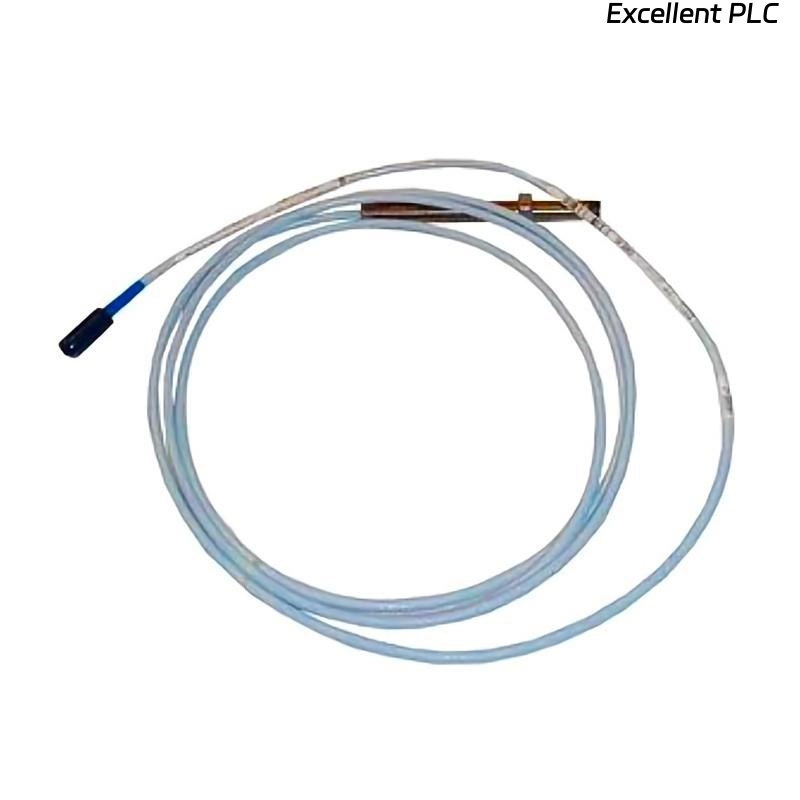
Table of Contents
- Bently Nevada 173688-01-20-12-05 Troubleshooting Entry
- Typical Signal Fault Symptoms in Proximity Probe Systems
- Fault Diagnosis Logic Based on Voltage Behavior
- Common Causes of Probe Faults
- Real Case: Gap Drift Under Thermal Expansion
- Recovery Strategy and Optimization
- FAQ
- Technical Summary
Bently Nevada 173688-01-20-12-05 Troubleshooting Entry
Bently Nevada 173688-01-20-12-05 proximity probe troubleshooting shows that signal drift, abnormal readings, or flat output are mainly caused by probe gap deviation, installation instability, or system mismatch rather than probe failure.
This guide uses a voltage-based fault diagnosis approach commonly applied in field troubleshooting.
Typical Signal Fault Symptoms in Proximity Probe Systems
- Output voltage drifting over time
- Sudden signal drop or flatline
- Nonlinear vibration response
- High-frequency noise or instability
Each symptom corresponds to a mechanical or electrical issue.
Fault Diagnosis Logic Based on Voltage Behavior
IF voltage drifting slowly:
    check thermal expansion effects
    inspect probe mounting stability

IF voltage > -5V:
    probe too far from shaft

IF voltage < -12V:
    probe too close to shaft

IF signal noisy:
    check shielding and grounding
    inspect cable routing
This logic prioritizes physical inspection before replacing components.
Common Causes of Probe Faults
- Incorrect probe gap setting
- Thermal expansion shifting probe position
- Cable or connector degradation
- Mismatch in system length configuration
Real Case: Gap Drift Under Thermal Expansion
In a gas turbine system, vibration readings gradually increased from 3 mm/s to 7 mm/s during temperature rise.
Observed Data:
- Gap voltage shifted from -9V to -6.5V
Analysis: Probe mounting bracket expanded under heat.
Root Cause: Thermal expansion causing gap increase.
Solution:
- Repositioned probe with compensation margin
- Improved mounting rigidity
Result: Voltage stabilized at -8.8V, vibration returned to 3.2 mm/s.
Recovery Strategy and Optimization
- Maintain stable probe mounting structure
- Regularly verify gap voltage
- Ensure proper shielding and grounding
- Match system components correctly
Preventive maintenance reduces unexpected faults.
FAQ
Why does the signal drift over time?
This is often caused by thermal expansion or mechanical instability.
How to quickly diagnose probe issues?
Measure gap voltage and compare with standard range (-8V to -10V).
Is probe replacement necessary?
No, most issues are related to installation and environment.
Technical Summary
This Troubleshooting Guide demonstrates that Bently Nevada 173688-01-20-12-05 probe faults are primarily caused by installation conditions and environmental effects. A structured fault diagnosis approach ensures accurate and stable vibration monitoring.