 Excellent PLC


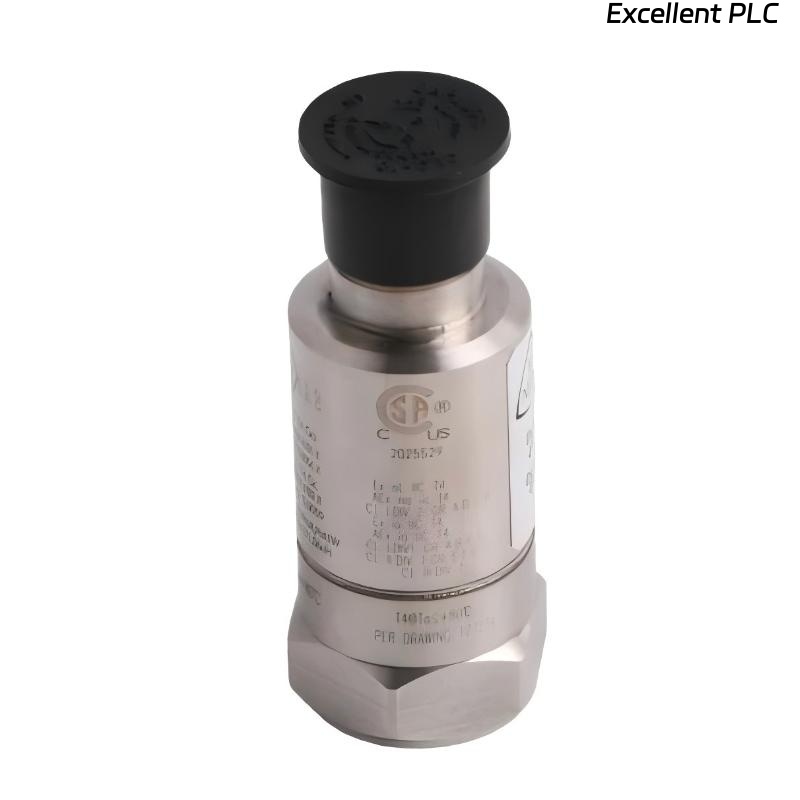
Table of Contents
- Bently Nevada 177230-01-02-IN Installation Guide Entry
- 177230-01-02-IN Seismic Sensor Role in PLC Monitoring Systems
- Mounting Logic for Medium-Range Vibration Measurement
- 4–20 mA Loop Setup and System Configuration
- Common Installation Risks and Field Mistakes
- Commissioning and Signal Verification
- FAQ
- Technical Summary
Bently Nevada 177230-01-02-IN Installation Guide Entry
Bently Nevada 177230-01-02-IN seismic sensor installation problems are usually caused by improper mounting location or incorrect vibration transmission path, leading to reduced signal amplitude rather than actual sensor failure.
This Installation Guide focuses on medium-range vibration systems (typically 0–25.4 mm/s) where installation accuracy directly determines signal reliability.
177230-01-02-IN Seismic Sensor Role in PLC Monitoring Systems
- Measures casing vibration velocity
- Output: standard 4–20 mA loop-powered signal
- Typical range: 0–25.4 mm/s (Option 01)
- Frequency response: ~3 Hz to 1 kHz (Option 02)
This configuration is widely used in pumps, fans, and medium-load rotating equipment. :contentReference[oaicite:0]{index=0}
Engineering Note: The “IN” option typically indicates region-specific certification or configuration, but does not change core measurement behavior.
Mounting Logic for Medium-Range Vibration Measurement
Unlike high-range sensors, medium-range sensors are more sensitive to installation damping:
- Select rigid mounting point (bearing housing preferred)
- Avoid installation on thin covers or brackets
- Ensure flat metal contact surface
- Apply proper tightening torque (avoid under-tightening)
IF signal amplitude too low:
    vibration energy lost at mounting interface

IF signal unstable:
    mounting looseness or structural resonance
Field Insight: Medium-range sensors are more sensitive to installation errors than high-range models because signal amplitude is lower.
4–20 mA Loop Setup and System Configuration
- Supply voltage: 12–36 VDC
- Output: 4–20 mA proportional to vibration velocity
- Integration: PLC analog input or I/O module
IF current = 0 mA:
    check loop wiring or power supply

IF signal stuck at 4 mA:
    no vibration or installation issue

IF signal saturates early:
    PLC scaling mismatch
The sensor integrates easily into industrial systems and supports continuous condition monitoring. :contentReference[oaicite:1]{index=1}
Common Installation Risks and Field Mistakes
- Mounting on low-vibration zones
- Loose installation causing signal damping
- Incorrect PLC scaling configuration
- Poor grounding introducing noise
Real Case:
In a cooling pump system, vibration readings remained between 4–7 mA despite noticeable mechanical vibration.
Observed Data:
- Expected vibration ~12 mm/s
Root Cause: Sensor installed on auxiliary support frame instead of bearing housing.
Solution:
- Relocated sensor to rigid bearing housing
- Re-tightened mounting interface
Result: Signal increased to 8–15 mA, matching actual vibration.
Commissioning and Signal Verification
- Check baseline output (~4–6 mA)
- Monitor signal during startup and load change
- Compare with portable vibration analyzer
Commissioning Tip: Always verify both mechanical installation and PLC scaling simultaneously.
FAQ
Why does the signal stay near 4 mA?
This is usually due to poor mounting location or insufficient vibration transmission.
What is the typical measurement range?
0–25.4 mm/s, suitable for medium-load rotating equipment. :contentReference[oaicite:2]{index=2}
Can it connect directly to PLC systems?
Yes, via standard 4–20 mA analog inputs.
Technical Summary
This Installation Guide shows that Bently Nevada 177230-01-02-IN performance depends on correct mounting location, proper mechanical coupling, and accurate PLC scaling. Proper installation ensures reliable vibration monitoring in medium-range industrial applications.