 Excellent PLC


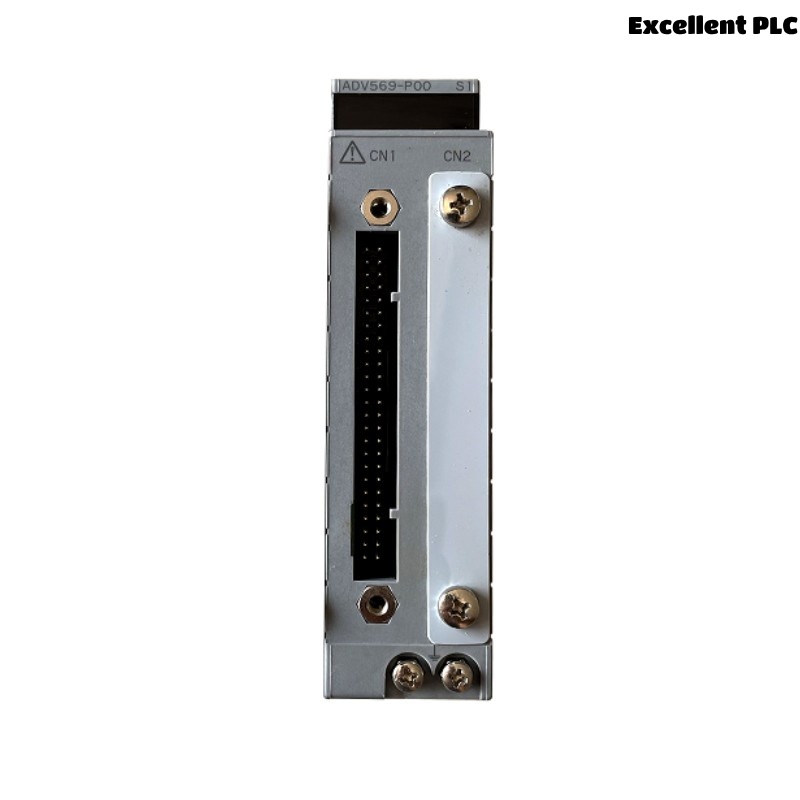
The Yokogawa ADV569 Digital I/O Module is designed to deliver stable and reliable digital output control for industrial automation systems. When output abnormalities occur, the root cause is often related to field wiring, power distribution, connected loads, or controller configuration rather than an internal hardware failure. A structured Troubleshooting procedure helps maintenance engineers identify faults quickly, reduce production downtime, and avoid unnecessary module replacement.
Contents
- 1. Understanding ADV569 Output Faults
- 2. Common Failure Symptoms
- 3. Typical Causes of Output Problems
- 4. Controller Logic Verification
- 5. Module Status Inspection
- 6. Output Voltage Measurement
- 7. Field Device Load Inspection
- 8. Wiring and Terminal Troubleshooting
- 9. External Power Supply Diagnosis
- 10. System Configuration Verification
- 11. Recommended Troubleshooting Workflow
- 12. Corrective Actions
- 13. Functional Recovery Verification
- 14. Preventive Maintenance
- 15. Real Industrial Maintenance Case
- 16. Frequently Asked Questions
Understanding ADV569 Output Faults
Output failures on the ADV569 are rarely caused by the module itself. Most service cases involve loose wiring, incorrect common negative connections, overloaded field devices, insufficient external power, or configuration errors within the control system.
Because every 16 output channels share a common negative terminal, a single wiring problem can affect an entire output group.
Common Failure Symptoms
- Output LED is ON but field equipment remains OFF
- Multiple outputs in one channel group fail simultaneously
- Relay operates intermittently
- Solenoid valve cannot energize
- Output voltage decreases under load
- Unexpected alarm activation
- Slow or unstable output response
Typical Causes of Output Problems
- Loose terminal screws
- Incorrect common negative wiring
- External fuse failure
- Relay coil short circuit
- Power supply voltage drop
- Damaged field cables
- Incorrect channel assignment
- Poor cabinet grounding
Controller Logic Verification
Before performing electrical testing, verify that the controller is generating the correct output command.
- Review sequence execution
- Verify interlock conditions
- Check operator commands
- Inspect output tag status
- Confirm logic download status
Module Status Inspection
- Inspect RUN indicator
- Observe channel status LEDs
- Review diagnostic alarms
- Verify communication status
- Inspect module installation
Output Voltage Measurement
| Measured Result | Possible Diagnosis |
|---|---|
| 24 VDC Stable | Normal output operation |
| 0 VDC | No controller command or open circuit |
| 8–16 VDC | High resistance or overloaded output circuit |
| Fluctuating Voltage | Loose connection or unstable power supply |
Measurements should always be taken under operating conditions with the field device connected, allowing voltage drops caused by excessive resistance to be identified.
Field Device Load Inspection
- Measure relay coil resistance
- Inspect solenoid current
- Verify contactor operation
- Check suppression components
- Inspect field actuator wiring
Wiring and Terminal Troubleshooting
Field wiring problems remain one of the leading causes of digital output failures.
- Verify cable continuity
- Inspect terminal torque
- Check polarity
- Inspect marshalling cabinet wiring
- Verify common negative connections
- Inspect junction boxes
External Power Supply Diagnosis
- Measure supply voltage under load
- Inspect DC distribution panels
- Verify protective fuse condition
- Check common negative bus integrity
- Monitor voltage during switching operations
System Configuration Verification
- Review channel allocation
- Verify process tag mapping
- Inspect downloaded project
- Confirm controller parameters
- Check engineering database consistency
Recommended Troubleshooting Workflow
VERIFY CONTROLLER COMMAND
CHECK MODULE STATUS
MEASURE OUTPUT VOLTAGE
VERIFY FIELD POWER
INSPECT COMMON NEGATIVE WIRING
CHECK FIELD LOAD
VERIFY SYSTEM CONFIGURATION
IDENTIFY ROOT CAUSE
VALIDATE REPAIR
Following this workflow allows engineers to isolate electrical faults efficiently while minimizing unnecessary maintenance activities.
Corrective Actions
- Repair damaged field wiring
- Replace corroded terminal blocks
- Correct common negative wiring
- Replace failed relay coils
- Repair unstable power supply circuits
- Replace the ADV569 module only after confirming all external components are operating correctly
Functional Recovery Verification
- Execute repeated switching tests
- Verify relay operation
- Observe valve movement
- Monitor diagnostic messages
- Validate all affected output groups
Preventive Maintenance
Routine preventive maintenance significantly reduces unexpected output failures in high-density digital output modules.
- Inspect wiring terminals every six months
- Measure output voltage periodically
- Verify grounding annually
- Review controller diagnostics regularly
- Maintain updated configuration backups
Real Industrial Maintenance Case
During maintenance at a petrochemical facility, operators reported that sixteen consecutive output channels controlled by an ADV569 Digital I/O Module failed to activate multiple emergency isolation valves.
The controller displayed normal output commands, and all module status LEDs indicated healthy operation. Voltage measured directly at the module outputs remained stable at approximately 24 VDC.
Field measurements at the valve terminals, however, showed less than 10 VDC under load. Engineers traced the problem to a loose common negative connection affecting one entire 16-channel output group.
After tightening the terminal and replacing a damaged conductor:
- All sixteen output channels resumed normal operation.
- Valve response returned immediately.
- No additional output alarms occurred during continuous monitoring.
- The ADV569 module remained in service without replacement.
This case demonstrates the importance of checking shared common negative wiring whenever multiple adjacent output channels fail simultaneously.
Frequently Asked Questions
Why do sixteen output channels fail at the same time?
Because the ADV569 groups outputs with a shared common negative connection, an open or loose common conductor can disable all channels within that group.
Should the module be replaced immediately after an output failure?
No. Engineers should first verify controller logic, field wiring, common negative connections, external power supplies, connected loads, and system configuration before replacing the module.
How can recurring output faults be prevented?
Regular inspection of terminal connections, common wiring, power supplies, grounding systems, and field devices significantly improves long-term reliability and reduces unexpected maintenance events.
Summary: Effective troubleshooting of the Yokogawa ADV569 Digital I/O Module requires systematic controller verification, electrical measurement, wiring inspection, load analysis, and configuration validation. Following a structured diagnostic workflow allows maintenance engineers to identify the true root cause quickly while minimizing downtime and avoiding unnecessary hardware replacement.