 Excellent PLC


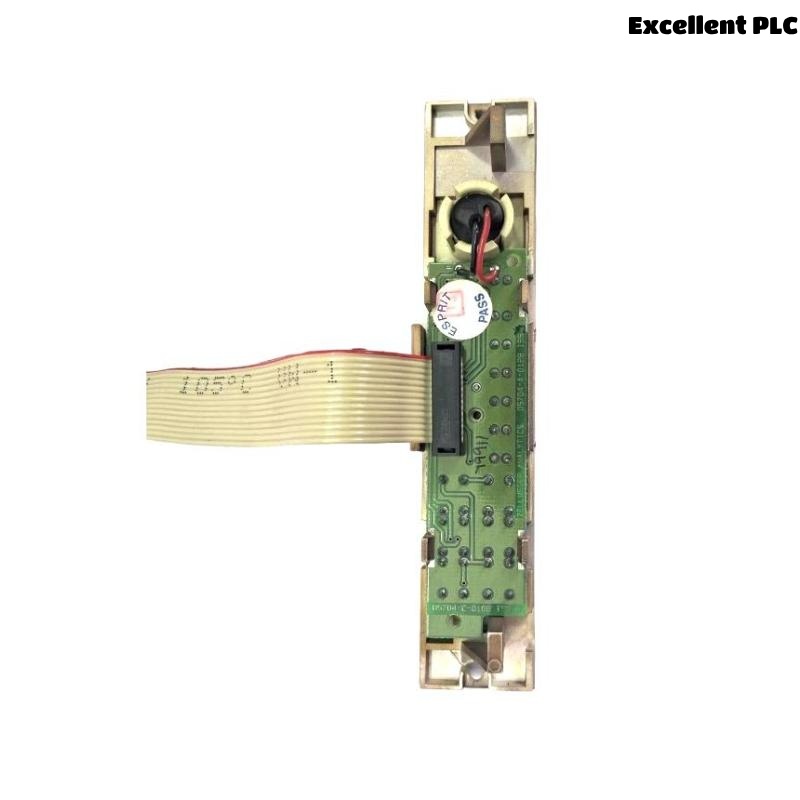
The Honeywell 05704-A-0146 5704F Fire Control Card is a microprocessor-based control module used in the Honeywell System 5704F Fire Detection Controller. It continuously monitors up to four independent fire detection zones, processes alarm and fault conditions, controls monitored DC outputs and relay interfaces, and communicates with other controller modules through the backplane. During long-term operation, issues such as fire loop faults, detector failures, alarm output malfunctions, communication errors, or configuration problems may affect system reliability. A systematic troubleshooting procedure enables maintenance engineers to quickly locate faults and restore dependable fire protection.
Contents
- 1. Understanding Fire Control Card Faults
- 2. Common Failure Symptoms
- 3. Typical Causes
- 4. Initial Hardware Inspection
- 5. Electrical Verification
- 6. Diagnostic Analysis
- 7. Recommended Troubleshooting Workflow
- 8. Corrective Actions
- 9. Functional Recovery Verification
- 10. Preventive Maintenance
- 11. Industrial Maintenance Case
- 12. Frequently Asked Questions
Understanding Fire Control Card Faults
The Honeywell 05704-A-0146 supervises detector loops, evaluates alarm conditions, controls relay outputs, and communicates with the System 5704F backplane. Faults may result from damaged fire detectors, open or shorted field wiring, incorrect configuration parameters, unstable power supplies, faulty monitored outputs, communication failures, or internal hardware defects. Immediate diagnosis is essential because failures may prevent the system from responding correctly during a fire emergency.
Common Failure Symptoms
- One or more fire zones remain in fault status.
- Fire alarms fail to activate.
- False fire alarms occur repeatedly.
- Detector loops report open circuit or short circuit faults.
- Monitored DC outputs fail to operate.
- Remote reset or remote control functions are unavailable.
- Status LEDs indicate communication errors.
- The controller cannot recognize the control card.
Typical Causes
- Faulty fire detector.
- Open or shorted field wiring.
- Loose terminal connections.
- Incorrect detector configuration.
- Power supply instability.
- Damaged monitored output circuit.
- Backplane communication failure.
- Internal control card malfunction.
Initial Hardware Inspection
- Verify controller power supply.
- Inspect module installation.
- Check detector loop wiring.
- Inspect terminal blocks.
- Verify front-panel LED indications.
- Review controller diagnostic messages.
Electrical Verification
- Measure detector loop voltage.
- Verify loop continuity.
- Check monitored DC output voltage.
- Measure power supply stability.
- Inspect cable insulation resistance.
- Verify protective grounding.
Diagnostic Analysis
| Observed Condition | Possible Diagnosis |
|---|---|
| Zone fault remains active | Detector failure, loop wiring fault, or configuration error |
| No fire alarm output | Relay configuration error or monitored output failure |
| False fire alarms | Electrical interference, detector contamination, or unstable wiring |
| Communication failure | Backplane connection problem or module hardware fault |
| Remote reset unavailable | Remote input wiring fault or configuration issue |
Recommended Troubleshooting Workflow
VERIFY SYSTEM POWER
CHECK CONTROL CARD STATUS
INSPECT FIRE LOOP WIRING
VERIFY DETECTOR OPERATION
TEST MONITORED OUTPUTS
CHECK RELAY FUNCTIONS
VERIFY SYSTEM CONFIGURATION
CONFIRM NORMAL OPERATION
Corrective Actions
- Replace defective fire detectors.
- Repair damaged loop wiring.
- Tighten loose terminal connections.
- Correct configuration parameters.
- Repair monitored output circuits.
- Clean module connectors.
- Reseat the control card.
- Replace the module after confirming internal hardware failure.
Functional Recovery Verification
- Verify all four fire zones operate correctly.
- Test detector alarm activation.
- Verify monitored DC outputs.
- Confirm relay output operation.
- Verify remote input functions.
- Monitor communication stability.
Preventive Maintenance
- Inspect detector loops periodically.
- Test all fire detectors according to maintenance schedules.
- Verify relay outputs.
- Clean module connectors.
- Inspect field wiring.
- Maintain detailed maintenance records.
Industrial Maintenance Case
During a scheduled fire protection inspection at a petrochemical terminal, Zone 4 of a Honeywell 05704-A-0146 Fire Control Card continuously reported a loop fault and failed to activate the fire alarm during detector testing. Engineers found corrosion inside a field junction box that caused intermittent loop resistance.
After replacing the damaged wiring, cleaning the terminal connections, verifying detector operation, testing monitored outputs, and repeating the functional tests:
- All four fire detection zones operated normally.
- Fire alarms activated immediately during detector testing.
- Monitored DC outputs functioned correctly.
- The System 5704F controller resumed stable operation with no additional diagnostic faults.
Frequently Asked Questions
Why does one fire zone remain in fault condition?
The most common causes include detector failure, open or shorted loop wiring, loose terminal connections, incorrect configuration, or a hardware fault affecting the input channel.
Why does the controller generate false fire alarms?
False alarms are typically caused by contaminated detectors, electrical interference, unstable field wiring, incorrect detector settings, or poor grounding.
When should the Honeywell 05704-A-0146 Fire Control Card be replaced?
The module should be replaced only after confirming that the detectors, field wiring, monitored outputs, relay interfaces, power supply, and controller configuration are operating correctly while the control card continues to exhibit internal hardware or communication failures.
Summary
Effective troubleshooting of the Honeywell 05704-A-0146 Fire Control Card requires systematic inspection of fire detector loops, monitored outputs, relay functions, field wiring, communication interfaces, and configuration parameters. Routine preventive maintenance and scheduled functional testing help ensure dependable fire detection and long-term reliability in Honeywell System 5704F fire protection systems.