 Excellent PLC


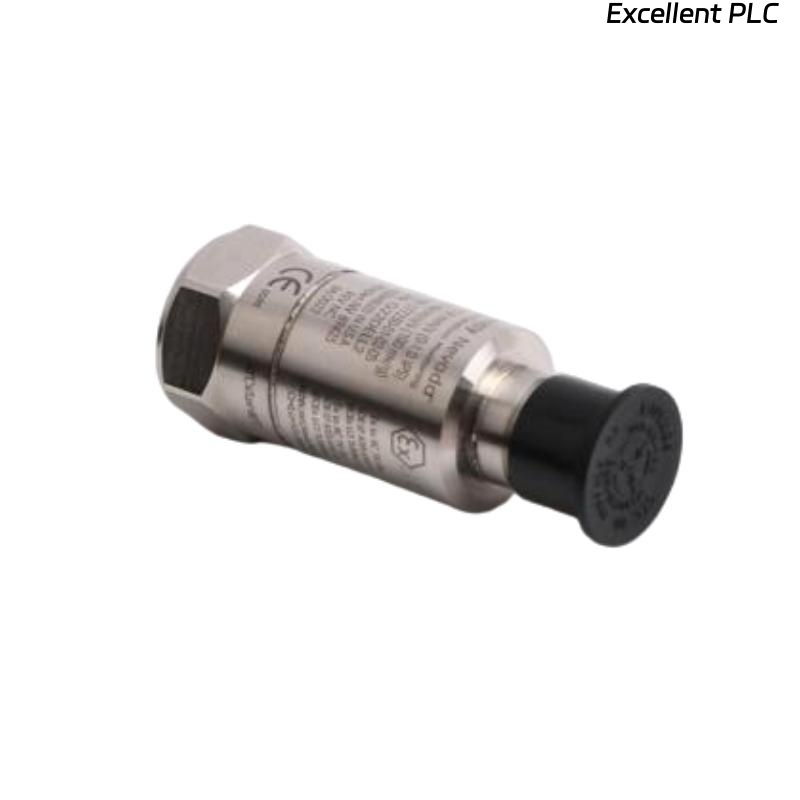
Table of Contents
- Bently Nevada 177230-01-02-CN Troubleshooting Entry
- Fault Patterns in Seismic Sensor Outputs
- Engineering Fault Diagnosis Approach
- Root Cause Analysis in Hazardous Systems
- Real Case: Signal Drift Due to Grounding Fault
- Recovery and Preventive Strategy
- FAQ
- Technical Summary
Bently Nevada 177230-01-02-CN Troubleshooting Entry
Bently Nevada 177230-01-02-CN seismic sensor troubleshooting indicates that abnormal 4–20 mA signals—such as drift, fluctuation, or saturation—are mainly caused by grounding issues, environmental factors, or installation errors rather than sensor failure.
This guide uses signal behavior as the core basis for fault diagnosis.
Fault Patterns in Seismic Sensor Outputs
- Constant 4 mA → no vibration or installation problem
- Slow drift → grounding or temperature influence
- Random fluctuation → EMI or moisture ingress
- Signal drop → wiring or connector issue
Each pattern reflects a specific fault mechanism.
Engineering Fault Diagnosis Approach
IF signal = 4 mA:
    check mounting location
    verify loop wiring

IF signal drifting:
    inspect grounding system
    check temperature effects

IF signal noisy:
    inspect cable routing
    check shielding

IF intermittent:
    check connectors and glands
This structured approach reduces unnecessary sensor replacement.
Root Cause Analysis in Hazardous Systems
- Ground loops causing signal instability
- Moisture ingress affecting electrical contacts
- Poor mechanical coupling reducing vibration transmission
- Incorrect intrinsic safety configuration
Real Case: Signal Drift Due to Grounding Fault
In a gas compressor station, vibration signal gradually increased from 6 mA to 15 mA without any mechanical change.
Observed Data:
- Signal drift correlated with electrical load variation
Analysis: Electrical interference suspected.
Root Cause: Ground loop between sensor and PLC cabinet.
Solution:
- Reconfigured grounding to single-point system
- Improved cable shielding
Result: Signal stabilized at 9–11 mA, matching actual vibration (~5 mm/s).
Recovery and Preventive Strategy
- Implement single-point grounding
- Use shielded cables and proper routing
- Maintain IP sealing integrity
- Perform periodic signal validation
Preventive measures significantly reduce failure risk.
FAQ
Why does the signal drift over time?
This is usually caused by grounding issues or environmental interference.
How to confirm grounding problems?
Check for multiple ground paths and eliminate loops.
Is sensor replacement necessary?
No, most faults are external to the sensor.
Technical Summary
This Troubleshooting Guide demonstrates that Bently Nevada 177230-01-02-CN faults are mainly caused by installation quality, grounding integrity, and environmental conditions. A structured diagnostic approach ensures stable and accurate vibration monitoring in hazardous environments.