 Excellent PLC


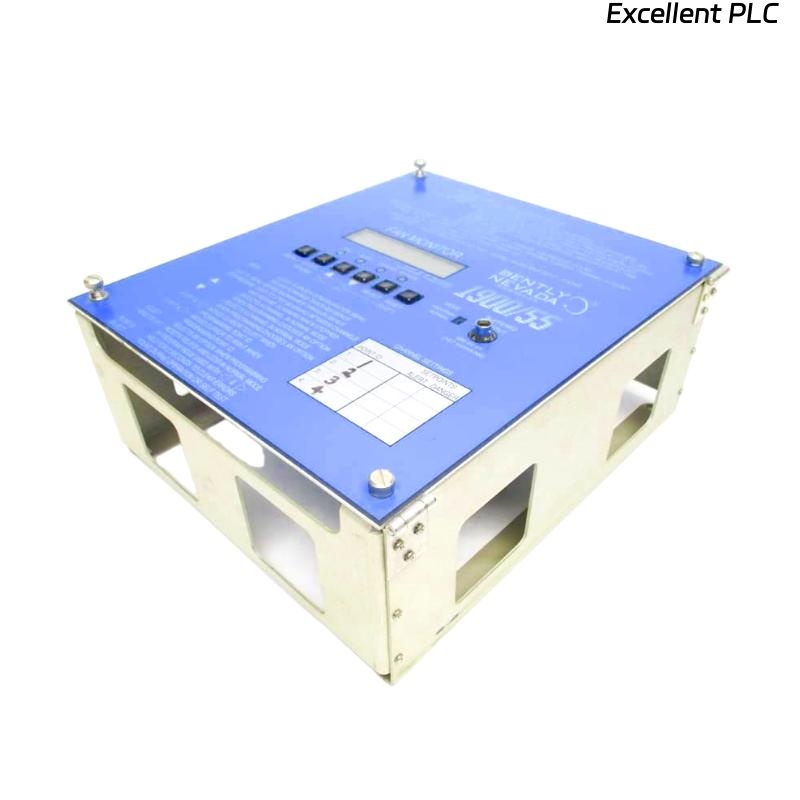
Bently Nevada 1900/55-01-01-01-00 Fan Monitor Installation Guide for Eliminating False Alarms in Fan Monitoring Systems
Table of Contents
- Why False Alarms Appear After 1900/55-01 Installation
- What We Observed After Initial Installation
- Initial Assumptions That Turned Out Wrong
- Rebuilding Installation Based on Signal Reality
- Fine-Tuning Alarm and Signal Configuration
- Final Stable Operation Without False Alarms
- 1900/55-01 Installation Best Practices
- FAQ
- Technical Summary
Why False Alarms Appear After 1900/55-01 Installation
Bently Nevada 1900/55-01-01-01-00 fan monitor installation issues often do not show up as missing signals, but as excessive alarms. This is especially common in fan systems where vibration fluctuates naturally with airflow.
What We Observed After Initial Installation
In a ventilation system:
- Fan operating normally
- Monitor triggered alarms intermittently
- No mechanical fault found
Alarm behavior:
- Triggered during airflow increase
- Disappeared at steady state
Initial Assumptions That Turned Out Wrong
At first, we suspected:
- Sensor sensitivity too high
- Fan imbalance
However:
- Sensor output stable
- Mechanical inspection normal
This forced us to rethink installation and configuration.
Rebuilding Installation Based on Signal Reality
We analyzed the vibration pattern:
- Baseline: 15–20 mm/s
- Transient peaks: up to 38 mm/s during airflow change
IF alarm_threshold < transient_peak:
    false_alarm = TRUE

IF signal_contains_transient:
    filtering_required = TRUE
The issue was not installation failure — it was incomplete installation logic.
Fine-Tuning Alarm and Signal Configuration
- Adjusted alarm threshold from 30 mm/s → 40 mm/s
- Enabled time delay (3 seconds)
- Improved cable shielding to reduce noise spikes
Also optimized sensor mounting:
- Moved sensor to more rigid bearing location
Final Stable Operation Without False Alarms
After optimization:
- No alarms during airflow transitions
- Stable readings during steady operation
Verified across multiple start-stop cycles.
1900/55-01 Installation Best Practices
- Consider transient vibration in fan systems
- Use time delay to avoid false alarms
- Set alarm thresholds based on real data
- Install sensors on rigid structures only
FAQ
Why does 1900/55-01 trigger alarms during airflow changes?
This is due to transient vibration peaks inherent in fan operation, not necessarily a fault.
How to avoid false alarms in fan monitoring systems?
Adjust alarm thresholds and apply time delay based on actual operating conditions.
Technical Summary
Bently Nevada 1900/55-01 installation must account for transient vibration behavior in fan systems. Field experience shows that false alarms are often caused by improper threshold and configuration rather than hardware issues. A refined installation approach combining signal analysis and configuration tuning ensures reliable monitoring without unnecessary alarms.