 Excellent PLC


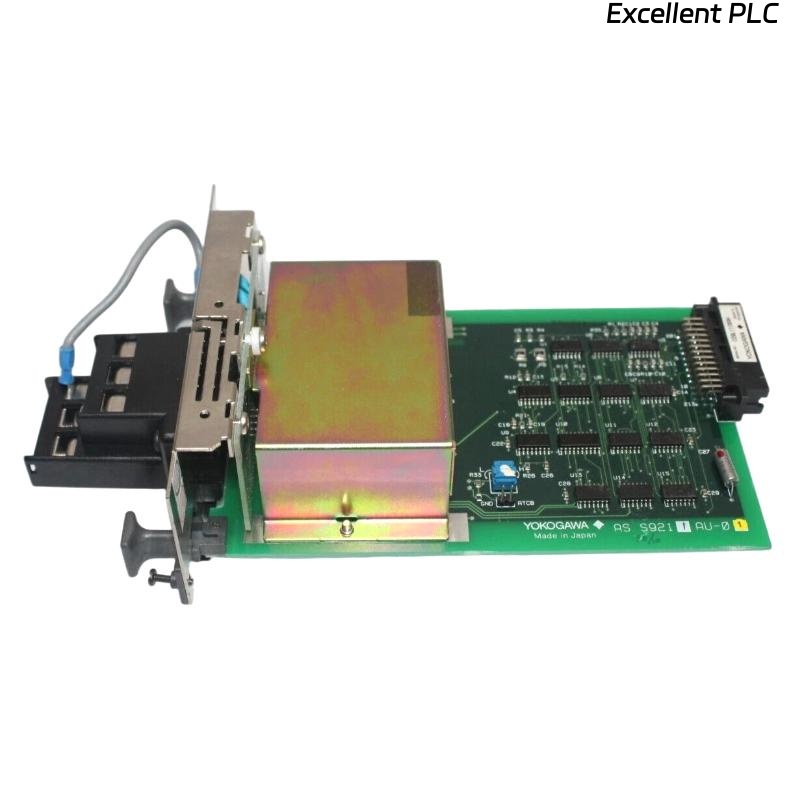
The Yokogawa AIP581 Electrical Transceiver RIO I/O Module is a communication interface module used in Yokogawa CENTUM VP and CENTUM CS 3000 Distributed Control Systems (DCS). It serves as the electrical transceiver for the Remote I/O (RIO) communication bus, providing reliable high-speed data transmission between the Field Control Unit (FCU) and remote I/O nests. Designed for industrial environments with high electromagnetic interference, the AIP581 ensures deterministic communication, stable signal transmission, and dependable operation of distributed field devices. Proper installation, communication wiring, configuration, and commissioning are essential to achieve reliable system performance.
Contents
- 1. Product Overview
- 2. Main Features
- 3. Typical Applications
- 4. Installation Preparation
- 5. Hardware Inspection
- 6. Module Installation
- 7. RIO Communication Wiring
- 8. Communication Configuration
- 9. Commissioning Procedure
- 10. Functional Verification
- 11. Preventive Maintenance
- 12. Practical Installation Case
- 13. Frequently Asked Questions
Product Overview
The AIP581 operates as the electrical communication interface between the FCU and Remote I/O stations. It converts controller logic signals into robust electrical communication signals suitable for the RIO communication bus, enabling reliable long-distance communication between distributed I/O devices and the control system. It is commonly deployed in CENTUM VP and CENTUM CS 3000 architectures requiring stable field communication.
Main Features
- Electrical transceiver for RIO communication
- High-speed deterministic data transmission
- Support for Remote I/O networks
- Industrial-grade electromagnetic noise immunity
- Reliable communication over long cable distances
- Integrated communication diagnostics
- Modular plug-in construction
- Continuous industrial operation
Typical Applications
- CENTUM VP Distributed Control Systems
- CENTUM CS 3000 control systems
- Remote I/O communication networks
- Oil and gas processing facilities
- Petrochemical plants
- Power generation facilities
- Large-scale industrial automation systems
Installation Preparation
- Review the Remote I/O network architecture.
- Verify compatibility with the FCU.
- Prepare ESD protection equipment.
- Inspect communication cables and connectors.
- Schedule installation during an approved maintenance window.
Hardware Inspection
- Verify the AIP581 model number.
- Inspect the module housing for physical damage.
- Check the backplane connector.
- Inspect communication terminals and connectors.
- Verify status indicators are undamaged.
Module Installation
- Place the controller in maintenance mode.
- Wear an approved anti-static wrist strap.
- Insert the AIP581 into the designated communication slot.
- Secure the retaining screws.
- Verify complete engagement with the backplane.
- Inspect module alignment before applying power.
RIO Communication Wiring
- Connect the RIO communication cable securely.
- Verify cable polarity where applicable.
- Ensure connector locking mechanisms are fully engaged.
- Route communication cables separately from power wiring.
- Confirm cable shielding is correctly grounded.
Communication Configuration
- Assign the correct Remote I/O station address.
- Configure communication parameters.
- Verify engineering database consistency.
- Confirm successful controller initialization.
- Check communication status after startup.
Commissioning Procedure
VERIFY MODULE INSTALLATION
CHECK COMMUNICATION WIRING
POWER ON THE CONTROLLER
VERIFY MODULE DETECTION
CHECK REMOTE I/O COMMUNICATION
VERIFY PROCESS DATA
REVIEW DIAGNOSTIC STATUS
PLACE SYSTEM INTO OPERATION
Functional Verification
- Verify Remote I/O station detection.
- Confirm engineering workstation communication.
- Verify process data updates.
- Review communication diagnostics.
- Confirm normal module status indications.
Preventive Maintenance
- Inspect communication connectors regularly.
- Verify cable shielding integrity.
- Check cable routing for mechanical damage.
- Review communication diagnostic logs.
- Perform periodic communication verification.
Practical Installation Case
During the expansion of a petrochemical plant control system, an AIP581 module was installed to connect a new Remote I/O cabinet approximately 400 meters from the Field Control Unit.
Following startup, the controller reported intermittent communication alarms because one communication connector had not been fully tightened.
After securing the connector:
- The Remote I/O station immediately came online.
- Engineering diagnostics confirmed stable communication.
- Process values updated continuously.
- No additional communication alarms occurred during extended operation.
Frequently Asked Questions
What is the primary function of the AIP581?
The AIP581 acts as the electrical transceiver for the RIO communication bus, providing reliable communication between the Field Control Unit and Remote I/O stations.
What communication system does the AIP581 support?
The module is designed for the Remote I/O communication network used in Yokogawa CENTUM VP and CENTUM CS 3000 Distributed Control Systems.
What should be verified after installation?
Verify module recognition, Remote I/O communication, controller diagnostics, engineering workstation connectivity, communication stability, and normal process data updates.
Summary
Proper installation of the Yokogawa AIP581 Electrical Transceiver RIO I/O Module requires secure module mounting, correct RIO communication wiring, accurate communication configuration, comprehensive functional testing, and routine preventive maintenance. Following these procedures ensures reliable Remote I/O communication and dependable operation of Yokogawa CENTUM VP and CENTUM CS 3000 Distributed Control Systems.