 Excellent PLC


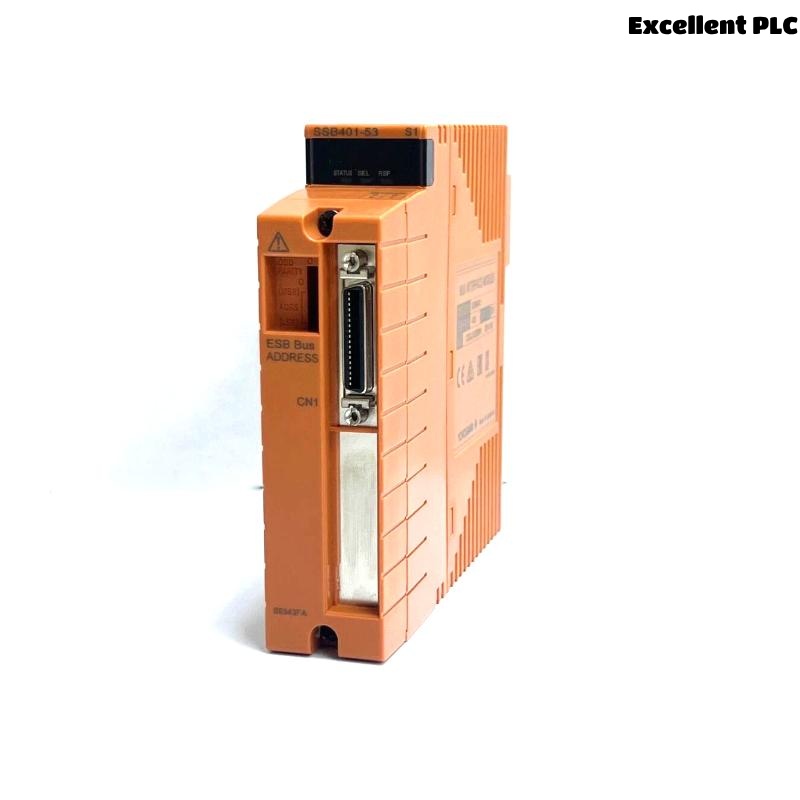
Yokogawa SSB401-S53 installation problems are usually caused by ESB bus topology mistakes, communication parameter mismatches, or improper node configuration rather than module hardware defects. For CENTUM VP and CENTUM CS systems, correct bus architecture is the foundation of stable data exchange. The SSB401-S53 functions as an ESB Bus Interface Slave Module that connects field I/O node units to the ESB bus and supports redundant communication architectures. :contentReference[oaicite:0]{index=0}
Contents
- SSB401-S53 Bus Interface Slave Module Overview
- ESB Bus Architecture Planning
- SSB401-S53 Hardware Installation Guide
- System Configuration and Setup
- Commissioning and Communication Validation
- Field Installation Experience
- FAQ
Yokogawa SSB401-S53 Bus Interface Slave Module Overview
The SSB401-S53 is an ESB Bus Interface Slave Module used within Yokogawa CENTUM CS and CENTUM VP Distributed Control Systems. Its primary role is to provide communication between Field Control Stations (FCS) and distributed I/O node units through the ESB network. The module supports high-speed communication, redundant bus configurations, and reliable industrial data transfer. :contentReference[oaicite:1]{index=1}
ESB Bus Architecture Planning for SSB401-S53 Installation
Before mounting the module, engineers should verify the communication architecture.
- FCS database configuration completed
- ESB network drawings approved
- Node addressing verified
- Redundant bus requirements reviewed
- Communication cable routing completed
- Grounding inspection finished
The SSB401-S53 can support communication with multiple I/O node units depending on system configuration. Improper database allocation frequently causes communication alarms during startup. :contentReference[oaicite:2]{index=2}
SSB401-S53 Hardware Installation Guide
Module Mounting Requirements
The module should be installed inside the designated Field I/O Node Unit according to the project design.
- Power down the affected node unit.
- Inspect backplane connectors.
- Insert the SSB401-S53 carefully.
- Secure mounting hardware.
- Connect ESB communication cables.
- Verify cable labeling.
Communication Cable Practices
- Avoid routing near high-voltage power circuits.
- Maintain proper shielding continuity.
- Use approved ESB communication cables.
- Inspect connectors for contamination.
In large process plants, cable routing quality often determines communication reliability more than the module itself.
SSB401-S53 System Configuration and Setup
After installation, System Configuration should be completed before placing the node into service.
VERIFY NODE STATUS
CHECK ESB COMMUNICATION
VERIFY NODE ADDRESS
CHECK DATABASE ASSIGNMENT
SAVE CONFIGURATION
CREATE BACKUP
The module supports redundant ESB communication designs that improve network availability during maintenance or fault conditions. :contentReference[oaicite:3]{index=3}
SSB401-S53 Commissioning and Communication Validation
Commissioning should focus on communication integrity rather than only module diagnostics.
- Node communication verification
- Redundant path testing
- I/O update monitoring
- Bus load assessment
- Alarm verification
- Data refresh validation
Installation Guide procedures should always include communication failover testing before project handover.
Real Commissioning Case with SSB401-S53
During expansion of a chemical processing unit, engineers observed intermittent I/O update delays after integrating three new node units.
Measured data showed:
- CPU utilization: 41%
- ESB update latency: 210 ms peak
- Power supply voltage: normal
- Network diagnostics: sporadic retries
Initial troubleshooting focused on replacing the Bus Interface Slave Module.
However, detailed investigation found two node addresses duplicated within the FCS database.
After correcting the addressing conflict:
- Latency dropped below 25 ms
- Communication retries disappeared
- All node units synchronized normally
We observed that configuration errors produced symptoms nearly identical to hardware communication faults.
SSB401-S53 Installation Guide FAQ
Can the SSB401-S53 operate in a redundant ESB network?
Yes. The module supports redundant ESB communication architectures for improved system reliability.
What should be checked before commissioning?
Verify node addressing, database configuration, communication integrity, and cable installation quality.
Why is communication validation important during startup?
Communication testing confirms that the FCS and field I/O nodes exchange data correctly under operating conditions.
Summary: A successful Yokogawa SSB401-S53 Installation Guide focuses on ESB network planning, proper module installation, accurate system configuration, and communication-based commissioning rather than simple hardware verification.