 Excellent PLC


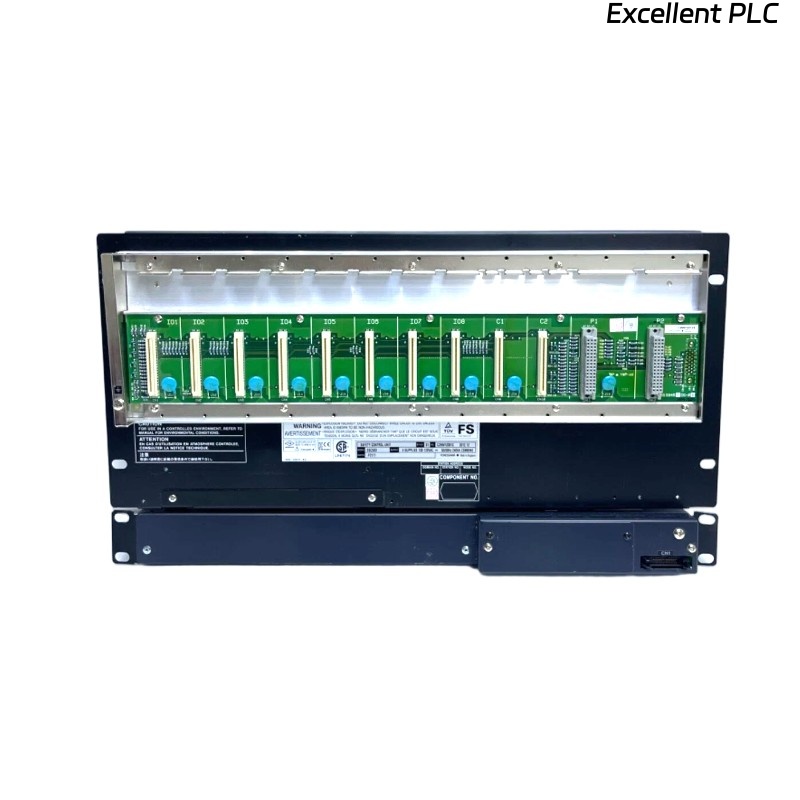
Yokogawa SSC50D-S2111 Duplexed Safety Control Unit installation success depends more on redundancy planning, power segregation, and Vnet/IP configuration than on physical mounting. In most ProSafe-RS projects, commissioning delays are caused by network architecture mistakes or grounding issues rather than controller hardware problems.
Contents
- SSC50D-S2111 Safety Control Unit Overview
- Installation Preparation for SSC50D-S2111
- Power and Communication Wiring
- SSC50D-S2111 Commissioning Procedure
- Safety Validation and Functional Testing
- Field Commissioning Experience
- FAQ
Yokogawa SSC50D-S2111 Duplexed Safety Control Unit Overview
The SSC50D-S2111 is a duplexed Safety Control Unit used within the Yokogawa ProSafe-RS Safety Instrumented System (SIS). The controller executes SIL-rated safety logic using redundant processors, redundant communication paths, and redundant power architecture to improve availability and fault tolerance. It supports dual-redundant Vnet/IP communication and is commonly deployed in ESD, FGS, and BMS applications. :contentReference[oaicite:0]{index=0}
SSC50D-S2111 Installation Preparation
Before starting the installation guide process, verify the following engineering conditions:
- Dedicated safety cabinet available
- Independent AC power feeders for redundant supplies
- Cabinet grounding resistance below 10 Ω
- Environmental temperature maintained within project specification
- Shielded communication cables prepared for Vnet/IP
- Approved Safety Requirement Specification (SRS) available
In actual projects, improper cabinet grounding often causes intermittent communication alarms during startup.
SSC50D-S2111 Power and Communication Wiring
Power Architecture
The duplexed safety controller should be connected to independent power sources whenever possible. Redundant power inputs improve system availability during maintenance or utility disturbances. :contentReference[oaicite:1]{index=1}
- Verify incoming voltage.
- Confirm protective earth continuity.
- Energize power supply A.
- Energize power supply B.
- Verify redundancy indication LEDs.
Vnet/IP Network Setup
Dual-redundant Vnet/IP communication should be physically separated where possible.
- Use industrial Ethernet infrastructure.
- Avoid routing safety network cables with VFD power cables.
- Maintain cable shield continuity.
- Label primary and secondary network paths.
SSC50D-S2111 Commissioning Procedure
Commissioning should focus on controller synchronization before application download.
CHECK CPU STATUS
VERIFY REDUNDANCY
CHECK VNET LINK
DOWNLOAD SAFETY LOGIC
VERIFY I/O HEALTH
RUN LOOP TEST
Engineering teams should verify processor synchronization status before enabling safety functions. Duplex controllers that appear healthy may still contain synchronization mismatches.
SSC50D-S2111 Safety Validation and Functional Testing
A complete Setup and Commissioning process includes functional validation.
- Emergency shutdown simulation
- Input channel verification
- Output trip verification
- Communication failover testing
- Power failover testing
- Watchdog response verification
For SIL applications, each safety loop should be tested individually rather than testing only the final shutdown sequence.
Real Commissioning Case with Yokogawa SSC50D-S2111
During startup of a petrochemical unit, engineers observed random communication diagnostics after application download. Initial suspicion focused on the SSC50D-S2111 processor pair.
Measured values showed:
- Network packet loss: 4.7%
- Cabinet earth resistance: 18.3 Ω
- Power quality: normal
Investigation revealed an improperly terminated shield on the redundant Vnet/IP segment. After correcting the grounding path, packet loss decreased below 0.1% and all communication diagnostics cleared without replacing any hardware.
This case demonstrates that system configuration errors are more common than actual controller failures.
SSC50D-S2111 Installation Guide FAQ
Can the Yokogawa SSC50D-S2111 operate with redundant power supplies?
Yes. The duplexed safety control architecture supports redundant power arrangements to improve availability during maintenance and fault conditions.
What is the most common commissioning issue with SSC50D-S2111 systems?
Improper grounding and network shielding are encountered more frequently than processor hardware failures.
Why should failover testing be included in the commissioning procedure?
Failover testing confirms that redundant processors, power supplies, and communication paths can maintain safety functionality during abnormal conditions.
Summary: A successful Yokogawa SSC50D-S2111 Installation Guide should emphasize power redundancy, Vnet/IP integrity, grounding quality, safety logic validation, and full failover testing before plant handover.