 Excellent PLC


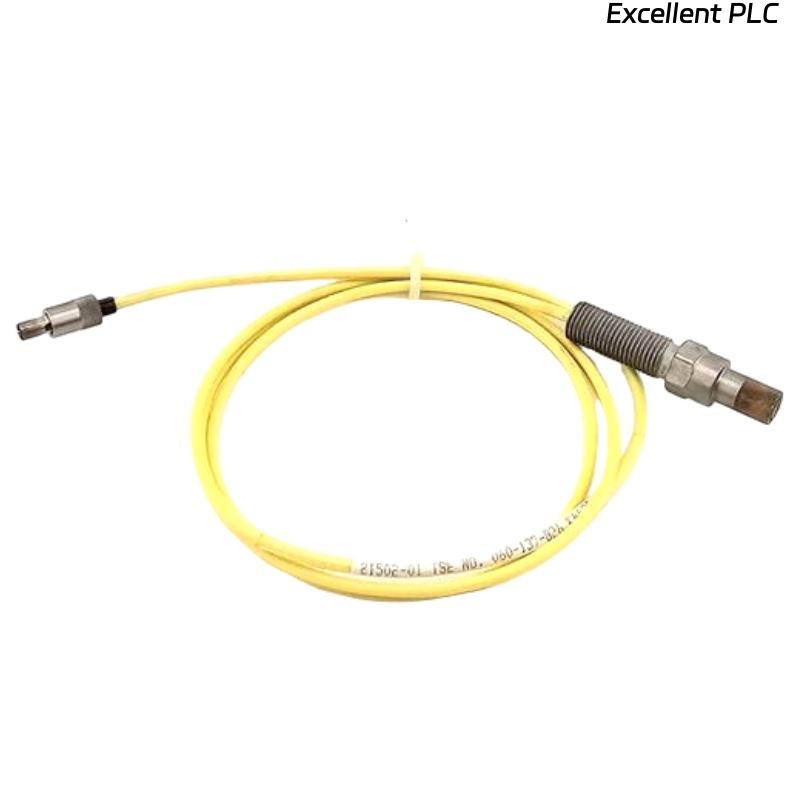
Table of Contents
- 21502-01 Installation Overview
- 8 mm Eddy Current Probe Application in Rotating Machinery
- Pre-Installation Inspection and Preparation
- Probe Mounting and Mechanical Alignment
- Probe Gap Calibration and Signal Adjustment
- Monitoring System Integration and Wiring
- Startup Validation and Commissioning Workflow
- Real Commissioning Experience
- Installation FAQ
- Final Engineering Summary
21502-01 Installation Overview
Bently Nevada 21502-01 8 mm eddy current probe installation quality directly influences shaft vibration monitoring accuracy and machine protection reliability. In many field applications, unstable vibration trends are caused by poor probe alignment or incorrect gap calibration rather than actual machine vibration.
This Installation Guide focuses on probe Setup, shaft target alignment, signal calibration, and Commissioning practices used in industrial rotating equipment.
8 mm Eddy Current Probe Application in Rotating Machinery
- Monitors shaft displacement and radial vibration
- Provides continuous signal feedback to protection systems
- Supports turbines, compressors, pumps, and motors
- Interfaces with PLC Controller and vibration monitoring modules
Pre-Installation Inspection and Preparation
- Inspect probe tip and cable for shipping damage
- Verify shaft target surface condition
- Check probe mounting bracket rigidity
- Confirm compatible extension cable and proximitor type
Probe Mounting and Mechanical Alignment
- Install probe perpendicular to shaft surface
- Ensure no contact occurs during shaft rotation
- Prevent thread distortion during tightening
- Use stable support structure to minimize vibration transfer
  // Mechanical Alignment Check
  IF Probe_Clearance < Minimum_Value THEN
      Stop_StartUp();
  ELSE
      Continue_Gap_Adjustment();
  END_IF;
Probe Gap Calibration and Signal Adjustment
- Adjust probe position while monitoring output voltage
- Typical operating gap voltage: -8V to -10V
- Verify stable voltage during shaft rotation
- Record baseline vibration and displacement values
Monitoring System Integration and Wiring
- Use shielded extension cable for signal integrity
- Separate signal cable from high-current wiring
- Ensure proper grounding at monitoring rack
- Verify correct System Configuration in monitoring software
Startup Validation and Commissioning Workflow
- Monitor gap voltage during startup sequence
- Observe waveform symmetry and stability
- Compare vibration trends with machine operating conditions
- Validate alarm and shutdown thresholds
Real Commissioning Experience
During commissioning of an industrial compressor, abnormal radial vibration alarms occurred:
- Displacement signal fluctuated ±90 µm
- Gap voltage unstable during thermal expansion
We observed that the probe bracket shifted slightly as machine temperature increased.
After corrective actions:
- Reinforced bracket support
- Reset probe gap to -9.0V
Result:
- Stable vibration monitoring achieved
- False alarms eliminated
Installation FAQ
What is the recommended gap voltage for the 21502-01 probe?
Most systems operate reliably between -8V and -10V DC.
Why is mounting rigidity important for eddy current probes?
Flexible mounting structures can generate false displacement readings.
Can thermal expansion affect probe calibration?
Yes. Improperly designed brackets may shift during temperature changes.
Final Engineering Summary
The Bently Nevada 21502-01 Installation Guide highlights that stable mounting, accurate gap calibration, and proper System Configuration are essential for reliable machinery protection and vibration monitoring.