 Excellent PLC


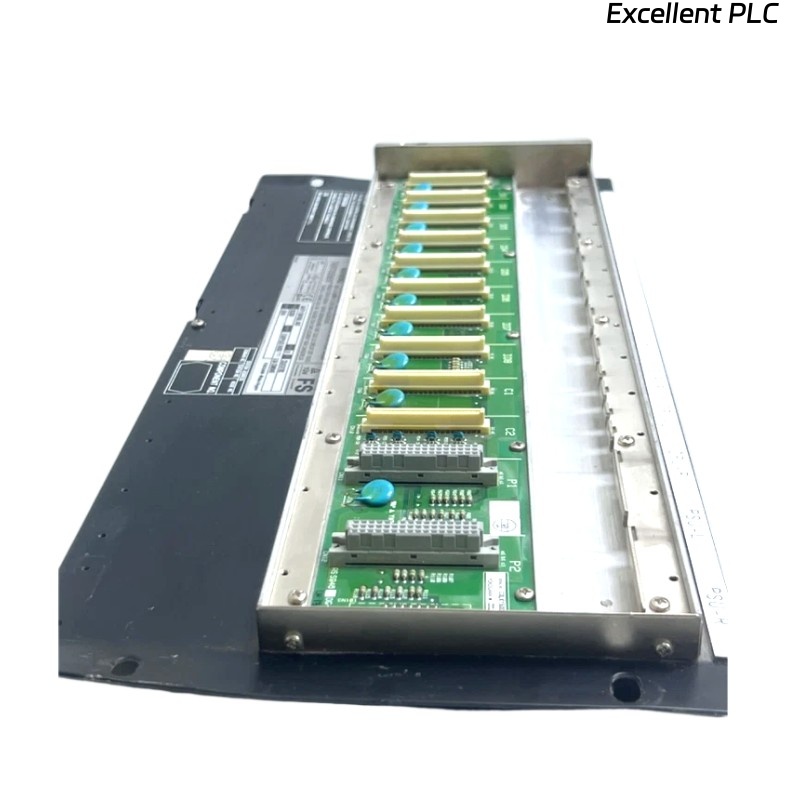
Table of Contents
- Product Overview
- SSC60D-F2542 Functional Description
- Technical Specifications
- System Architecture
- Installation Requirements
- Hardware Installation Procedure
- Power Supply Requirements
- Vnet/IP Network Configuration
- Safety I/O Integration
- Commissioning Procedure
- Safety Validation Checklist
- Industrial Application Example
- Frequently Asked Questions
Product Overview
The YOKOGAWA SSC60D-F2542 is a duplexed Safety Control Unit (SCU) used in the ProSafe-RS Safety Instrumented System (SIS). It functions as the core processing controller within a Safety Control Station (SCS), providing fault-tolerant execution of Emergency Shutdown (ESD), Fire & Gas (FGS), Burner Management System (BMS), and critical process protection applications. The SSC60D family is designed for SIL3 safety applications and supports integrated operation with Yokogawa CENTUM systems through the Vnet/IP control network. :contentReference[oaicite:0]{index=0}
SSC60D-F2542 Functional Description
- Executes SIL3-certified safety logic
- Provides duplexed processor redundancy
- Supports Safety Control Station (SCS) architecture
- Supports Vnet/IP integrated communication
- Performs deterministic safety execution cycles
- Provides online diagnostics and fault monitoring
- Maintains fail-safe operation during fault conditions
Technical Specifications
| Parameter | Specification |
|---|---|
| Model | SSC60D-F2542 |
| Product Type | Duplexed Safety Control Unit |
| System Platform | ProSafe-RS SIS |
| Safety Level | SIL3 |
| Controller Architecture | Dual Redundant CPUs |
| Communication Network | Vnet/IP |
| Safety Station Type | SCS (Safety Control Station) |
| Communication Mode | Redundant Ethernet |
| Processor Type | Fault-Tolerant Safety Processor |
| Installation | 19-inch Rack System |
| Application | ESD / FGS / SIS |
The SSC60D-F2542 is part of the ProSafe-RS architecture that integrates safety engineering stations, safety control stations, safety I/O, and Vnet/IP communication into a unified safety platform. ProSafe-RS supports SIL3 functionality in both standalone and integrated control architectures. :contentReference[oaicite:1]{index=1}
System Architecture
                 CENTUM VP
                      |
                   Vnet/IP
                      |
       +----------------------------+
       | SSC60D-F2542 Safety Unit   |
       | Duplex CPU Architecture    |
       +----------------------------+
                    ||
              Redundant ESB
                    ||
       +----------------------------+
       | Safety Node Units          |
       | Safety I/O Modules         |
       +----------------------------+
The safety controller communicates with engineering stations, operator stations, and distributed safety I/O through redundant communication networks and redundant controller architecture. :contentReference[oaicite:2]{index=2}
Installation Requirements
- Install in certified industrial control cabinets
- Verify cabinet grounding continuity
- Maintain specified environmental conditions
- Provide redundant power sources where required
- Use industrial-grade Ethernet infrastructure
- Separate communication and power wiring
Hardware Installation Procedure
- Verify rack mounting structure.
- Install SSC60D-F2542 controller assembly.
- Install redundant power modules.
- Install communication modules and couplers.
- Install safety I/O modules.
- Connect Vnet/IP communication cables.
- Verify all module seating and retention hardware.
- Inspect grounding continuity before energization.
IF Power_OK THEN
   Verify_Controller_Status();
   Verify_CPU_Redundancy();
   Verify_VnetIP_Status();
   Start_Safety_System();
ENDIF;
Power Supply Requirements
- Use approved SIS power architecture
- Verify redundant power operation
- Inspect terminal connections
- Check grounding continuity
- Verify power quality before startup
Vnet/IP Network Configuration
- Configure domain and station numbers
- Verify redundant communication paths
- Validate Layer 2 network infrastructure
- Check controller communication diagnostics
- Verify communication failover operation
Vnet/IP serves as the common communication network between ProSafe-RS and CENTUM systems, enabling integrated safety and process control architectures. :contentReference[oaicite:3]{index=3}
Safety I/O Integration
- Install approved safety I/O modules
- Verify node addressing
- Check ESB communication diagnostics
- Validate signal assignment configuration
- Perform loop integrity verification
ProSafe-RS systems support distributed safety I/O architectures and can expand through multiple safety node units connected through redundant communication infrastructure. :contentReference[oaicite:4]{index=4}
Commissioning Procedure
- Verify controller diagnostics
- Check redundancy synchronization
- Download validated safety application
- Verify communication integrity
- Execute cause-and-effect testing
- Validate shutdown functionality
- Record baseline system diagnostics
Safety Validation Checklist
- Controller redundancy operational
- Power redundancy verified
- Communication redundancy verified
- Safety I/O diagnostics normal
- Logic verification completed
- Proof testing completed
- SIL documentation approved
Industrial Application Example
A petrochemical complex deployed SSC60D-F2542 controllers within an integrated ProSafe-RS and CENTUM VP architecture. The duplex controller configuration provided continuous operation during processor maintenance activities while maintaining SIL3 safety functionality and uninterrupted process monitoring. The integrated Vnet/IP architecture simplified engineering and reduced maintenance overhead. :contentReference[oaicite:5]{index=5}
Frequently Asked Questions
What is the primary function of SSC60D-F2542?
It serves as the main safety controller within a ProSafe-RS Safety Control Station, executing SIL3 safety applications. :contentReference[oaicite:6]{index=6}
Does SSC60D-F2542 support redundant architecture?
Yes. The controller is designed for duplex operation and supports redundant communications and fault-tolerant safety processing. :contentReference[oaicite:7]{index=7}
Can it integrate with CENTUM VP?
Yes. ProSafe-RS controllers communicate through Vnet/IP and integrate directly with CENTUM systems. :contentReference[oaicite:8]{index=8}