 Excellent PLC


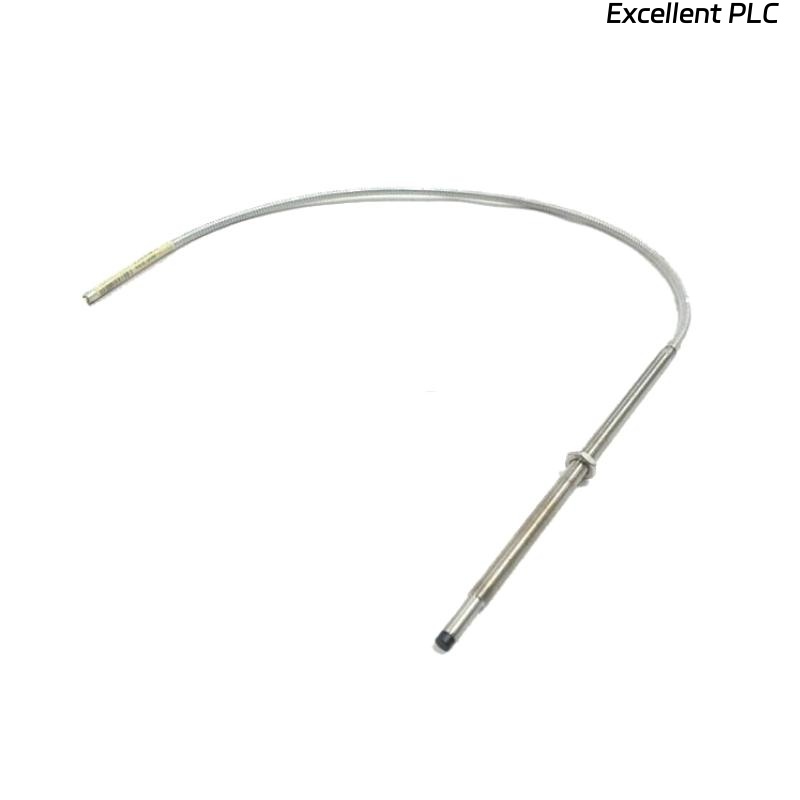
Table of Contents
- 22810-00-04-50-02 Installation Overview
- 7200 Series 8 mm Standard Mount Probe Function
- Mechanical Inspection Before Installation
- Probe Mounting and Gap Setup Procedure
- Signal Wiring and Shielding Requirements
- Commissioning and Dynamic Monitoring Validation
- Signal Stability Optimization Methods
- Real Turbine Installation Experience
- Installation FAQ
- Final Engineering Summary
22810-00-04-50-02 Installation Overview
Bently Nevada 22810-00-04-50-02 7200 Series 8 mm standard mount probe installation quality directly impacts shaft displacement monitoring accuracy and machinery protection reliability. In turbine and compressor systems, improper probe alignment, unstable brackets, and incorrect cable routing frequently cause intermittent vibration alarms.
This Installation Guide explains practical Setup methods for probe mounting, gap adjustment, signal wiring, and machinery monitoring Commissioning.
7200 Series 8 mm Standard Mount Probe Function
- Measures shaft displacement and radial vibration
- Supports continuous rotating machinery monitoring
- Interfaces with PLC Controller and vibration monitoring modules
- Used in turbines, compressors, pumps, and industrial equipment
Mechanical Inspection Before Installation
- Inspect probe threads and mounting surfaces
- Verify shaft target surface cleanliness
- Check bracket rigidity and thermal stability
- Ensure adequate probe tip clearance
Probe Mounting and Gap Setup Procedure
Accurate probe positioning is essential for stable shaft vibration monitoring and reliable machinery protection performance.
- Align probe perpendicular to shaft target surface
- Adjust operating gap to recommended voltage range
- Avoid excessive tightening torque during installation
- Secure extension cable near the mounting location
  // Probe Gap Calibration Logic
  IF Gap_Voltage < -8V OR Gap_Voltage > -10V THEN
      Adjust_Probe_Position();
  ELSE
      Start_System_Commissioning();
  END_IF;
Signal Wiring and Shielding Requirements
- Separate probe cables from motor and inverter wiring
- Maintain shielding continuity at all connectors
- Use grounded trays for long cable runs
- Verify monitoring rack input scaling configuration
Commissioning and Dynamic Monitoring Validation
- Observe waveform stability during startup
- Monitor gap voltage at operating speed
- Check thermal effects on probe alignment
- Verify alarm and shutdown response logic
Signal Stability Optimization Methods
- Reduce vibration transfer through cable supports
- Improve grounding continuity to minimize noise
- Monitor waveform harmonics during operation
- Record baseline shaft displacement values
Real Turbine Installation Experience
During commissioning of a steam turbine monitoring system, unstable shaft displacement readings occurred during acceleration:
- Gap voltage drifted from -9.1V to -6.0V
- Waveform spikes increased near operating speed
We observed that the probe bracket experienced minor thermal movement during operation.
After corrective actions:
- Improved bracket rigidity
- Adjusted probe alignment and cable support structure
Result:
- Stable shaft monitoring restored
- False vibration alarms eliminated
Installation FAQ
Why is probe gap adjustment important?
Incorrect gap settings may create unstable shaft displacement readings and inaccurate monitoring results.
Can thermal expansion affect probe performance?
Yes. Thermal movement may alter probe alignment and change gap voltage stability.
Should probe cables be isolated from inverter wiring?
Yes. Proper cable separation helps reduce EMI interference and improves signal integrity.
Final Engineering Summary
The Bently Nevada 22810-00-04-50-02 Installation Guide demonstrates that reliable vibration monitoring depends on accurate probe Setup, stable mounting structures, proper shielding continuity, and optimized System Configuration.